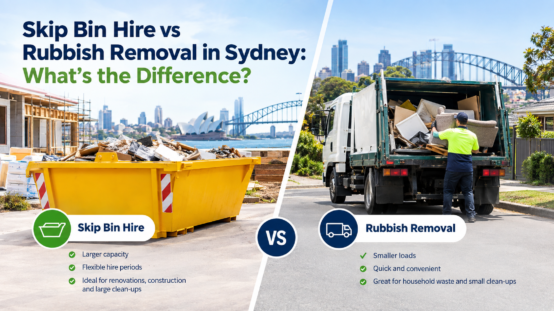
Skip Bin Hire vs Rubbish Removal in Sydney: What’s the Difference?
When you’ve got waste to get rid of, Sydney residents generally choose between two options: hiring a skip bin or booking a rubbish removal service. They solve the same basic problem, getting rid of unwanted waste, but they work in very different ways, and the right choice depends on how much waste you have, how much time you’ve got, and how hands-on you want to be. This guide breaks down the real differences so you can choose the option that actually suits your project.
What Is Skip Bin Hire?
Skip bin hire means a bin is delivered to your property, and you load it yourself over an agreed hire period, usually somewhere between 7 and 14 days. Once you’re done, the provider collects the bin and takes care of disposal. For our Commercial skip bin hire services in Sydney, pricing typically runs between $350 and $470, depending on bin size, hire period, location, and waste type.
How It Works
- You choose a bin size and waste type based on your project
- The bin is delivered to your property at a time that suits you
- You fill it at your own pace over the hire period
- The provider collects and disposes of it once you’re finished
What Is Rubbish Removal?
Rubbish removal, sometimes called junk removal, is a done-for-you service where a team comes to your property, loads the waste themselves, and takes it away in one visit. There’s no bin sitting on your property, and no loading required on your end.
How It Works
- You book a removal service and describe what needs to go
- A team arrives on the scheduled day
- They load and remove the waste directly, often within the same visit
- You’re generally charged based on volume or the amount of labour involved
Key Differences at a Glance
| Factor | Skip Bin Hire | Rubbish Removal |
|---|---|---|
| Who loads the waste | You, at your own pace | The removal team does it for you |
| Time on site | Bin stays for several days | Usually completed in one visit |
| Cost structure | Flat rate for size and hire period | Often priced by volume or labour |
| Best suited to | Renovations, ongoing clean-outs, larger volumes | One-off pickups, smaller loads, minimal effort |
| Physical effort required | Loading is up to you | Minimal, the team handles it |
When Skip Bin Hire Makes More Sense
- Renovations and construction projects, where waste builds up gradually over several days or weeks
- Larger volumes of waste, since skip bins are generally more cost-effective per cubic metre than paying for removal labour
- Projects where you want flexibility, filling the bin as you go rather than scheduling everything for one day
- DIY clean-outs, where you don’t mind doing the loading yourself in exchange for a lower overall cost
If you’re working through a renovation or a multi-day clean-out, it’s worth comparing our full range of skip bin sizes to match the bin to your project rather than guessing.
When Rubbish Removal Makes More Sense
- Small, one-off jobs, such as clearing a single room or a handful of bulky items
- Limited time or mobility, when loading a bin yourself isn’t practical
- Awkward or heavy items, like old furniture or appliances that are difficult to move without help
- No suitable space for a bin, such as apartments or properties without driveway access
For quick, low-effort jobs, rubbish removal often works out more convenient, even if the per-item cost is sometimes higher than a skip bin.
Comparing the Real Costs
Skip bin hire is usually priced as a flat rate based on size, waste type, and hire period, which tends to work out more cost-effective for larger volumes of waste since you’re paying once for the whole job. Rubbish removal is often priced by volume or by the labour involved in loading and transporting the waste, which can add up quickly for bigger jobs but still work out cheaper for very small, one-off pickups where hiring a bin wouldn’t be worth it.
Waste Type Still Matters, Either Way
Whichever option you choose, understanding your waste type affects both cost and what’s actually allowed for disposal.
- General Waste: everyday household or commercial rubbish
- Green Waste: garden clippings, branches, and organic material
- Mixed Waste: a combination of timber, bricks, tiles, and general renovation debris
It’s worth taking a moment to check accepted waste types before booking, since hazardous materials, liquids, and food waste aren’t accepted through either a skip bin or most standard rubbish removal services without special arrangements.
Which Option Should You Choose?
As a general rule:
- Choose skip bin hire if you’re working on a renovation, construction project, or any job generating waste over several days, and you don’t mind handling the loading yourself.
- Choose rubbish removal if you have a small amount of waste, limited time, or items that are too heavy or awkward to move without help.
For larger Sydney projects involving ongoing waste, a skip bin is almost always the more economical choice. For quick, one-off jobs, rubbish removal often saves you the hassle of loading altogether.
Final Thoughts
Skip bin hire and rubbish removal both solve the same problem in different ways. Skip bins suit renovations, larger projects, and anyone happy to load waste at their own pace, while rubbish removal suits small jobs, tight timeframes, and situations where doing the loading yourself just isn’t practical. Matching the service to your project, rather than defaulting to whichever option you’ve heard of first, is the easiest way to keep your waste removal both efficient and affordable.
Frequently Asked Questions
Is skip bin hire cheaper than rubbish removal in Sydney?
For larger volumes of waste, skip bin hire is usually more cost-effective since you’re paying a flat rate rather than per-item or labour-based pricing. For small, one-off jobs, rubbish removal can sometimes work out similarly priced or cheaper.
Can I get a skip bin delivered to an apartment in Sydney?
It depends on access and available space. If there’s no suitable spot for a bin, rubbish removal is often the more practical option for apartment-based clean-outs.
How long can I keep a skip bin before it needs to be collected?
Most providers offer a standard hire period of around 7 to 14 days, with extensions usually available if needed.
Do I need council approval for either option?
If a skip bin sits entirely on private property, approval usually isn’t required. Rubbish removal doesn’t involve a bin staying on-site, so this generally isn’t a consideration for that option.