I Discovered an Indian Railway Rule That Could Save Your Important Journey
Many railway passengers still do not know this important fact: a waiting-list ticket booked from a railway reservation counter is treated differently from a waiting-list e-ticket booked online. If an online ticket remains fully waitlisted after chart preparation, it is automatically cancelled and cannot be used for travel. However, a counter-booked waiting-list ticket is not automatically cancelled in the same way, which can give passengers additional options depending on railway rules and available accommodation. This was something I discovered during a recent train journey, and it completely changed my understanding of railway travel.
A Late-Night Conversation That Changed My Understanding
A few days ago, I was traveling by train. It was around 1:00 AM, and most passengers in the coach were asleep. During a brief moment when I woke up, I noticed two couples standing near the coach door. They had been there for quite some time, so I became curious and asked why they were standing instead of resting.
One of them explained their situation.
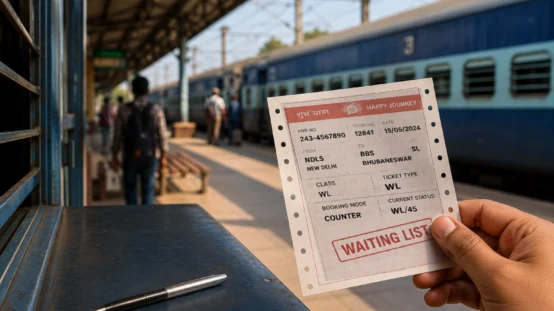
They had booked their train tickets several days earlier from a railway reservation counter. Their tickets were on the waiting list and unfortunately did not get confirmed even after chart preparation. Normally, many people assume that an unconfirmed ticket means the journey is impossible.
However, these passengers seemed calm. They already knew something that I did not know.
They explained that because their tickets were purchased from a railway reservation counter, the tickets were not automatically cancelled in the same way as a waitlisted online ticket. That conversation introduced me to a railway rule that I had never paid attention to before.
Understanding the Difference Between Counter Tickets and Online Tickets
Before this journey, I believed that all waiting-list tickets followed exactly the same rules. Like many passengers, I thought an unconfirmed ticket always meant the end of the journey.
After speaking with those passengers, I started researching the subject and discovered that Indian Railways handles online and counter-booked waiting-list tickets differently.
This difference is important because many travelers book tickets without understanding what happens when their waitlist status does not move to RAC or Confirmed.
What Happens to a Waitlisted Online Ticket?
When a passenger books a waiting-list ticket through the IRCTC website or mobile app, the ticket is considered an e-ticket. If the ticket remains fully waitlisted even after chart preparation, it is automatically cancelled.
The passenger’s name is removed from the reservation chart, and the ticket cannot be used for travel in a reserved coach. The refund process is also handled automatically according to IRCTC rules.
This means that a fully waitlisted online ticket effectively becomes useless for the planned journey once chart preparation is completed.
What Happens to a Waitlisted Counter Ticket?
A waiting-list ticket purchased from a railway reservation counter is handled differently. Unlike a fully waitlisted e-ticket, it is not automatically cancelled after chart preparation.
This is the information that surprised me the most.
However, it is very important to understand one thing correctly. A counter-booked waiting-list ticket does not guarantee a reserved berth or seat. It also does not automatically allow passengers to occupy reserved accommodation. Travellers must follow the latest Indian Railways rules and instructions issued by ticket-checking staff and railway authorities.
Many people misunderstand this point and assume that a counter ticket automatically guarantees the journey in the reserved coach. That assumption can create problems during travel.
How This Information Could Help Travelers
Looking back, I realised how many opportunities I may have missed because I did not know this difference.
Whenever my waiting-list ticket looked unlikely to be confirmed, I often searched for expensive last-minute alternatives. Sometimes I postponed important work. On a few occasions, I cancelled trips completely because I believed there were no other practical options available.
Understanding the distinction between counter-booked tickets and online tickets gives travellers more information when making decisions.
This can be especially useful during festival seasons, school vacations, public holidays, and other peak travel periods when waiting lists become extremely long.
Suppose you check train availability online and discover that your preferred train already has a significant waiting list. If your journey is important and flexibility matters, knowing the differences between booking methods can help you plan more effectively and avoid unnecessary confusion.
Check the Rules Before You Cancel Your Next Journey
The biggest lesson from my late-night train conversation was simple: never assume that a waiting-list ticket tells the entire story. Before cancelling an important trip, take a few minutes to understand the latest railway regulations, check your PNR status, and learn how different booking methods are treated.
A small piece of knowledge can sometimes save a great deal of stress.
Official Reference: Readers can verify the latest waiting list, cancellation, and reservation rules directly from the official Indian Railways and IRCTC resources:
• IRCTC Cancellation & Refund Rules: https://contents.irctc.co.in/en/CancellationRulesforIRCTCTrain.pdf
• Indian Railways Reservation Rules: https://www.indianrail.gov.in
Being aware of the rules before you travel can help you make better decisions and avoid unnecessary disruption to your plans.