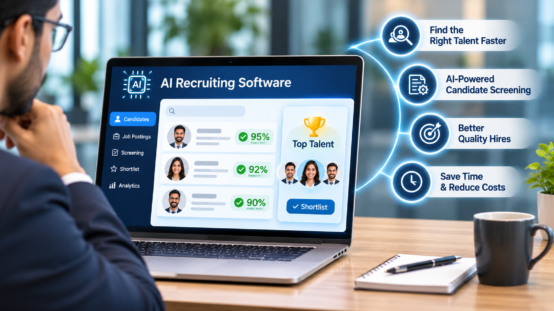
How AI Recruiting Software Helps Businesses Find Top Talent
Finding and hiring the right employees is essential for business growth. However, traditional recruitment methods can be time-consuming, especially when companies receive hundreds of applications for a single job opening. Reviewing resumes, screening candidates, scheduling interviews, and evaluating qualifications require considerable effort from HR teams. To simplify these activities, businesses are increasingly adopting AI recruiting software to improve hiring efficiency and identify suitable candidates.
AI recruiting technology uses artificial intelligence, automation, and data analysis to support different stages of the recruitment process. It helps organisations manage candidate information, streamline screening, and make more informed hiring decisions.
1. Automates Resume Screening
One of the biggest challenges in recruitment is reviewing a large number of resumes. Manually checking every application can delay the hiring process and increase the workload of recruiters.
AI recruiting software can analyse resumes and identify relevant information, including educational qualifications, professional experience, technical skills, and certifications. It can compare candidate profiles with job descriptions and help recruiters identify applicants who match specific requirements.
This automation reduces repetitive administrative work and allows HR professionals to focus on evaluating promising candidates.
2. Improves Candidate Matching
Finding candidates with the right skills and experience is important for building a successful team. Traditional recruitment methods often depend heavily on manual resume reviews, which may overlook qualified applicants.
AI-powered recruitment tools can analyse candidate profiles and compare their skills with the requirements of available positions. This helps recruiters discover relevant candidates based on qualifications, experience, and job-related competencies.
Better candidate matching can improve the quality of shortlists and support more effective hiring decisions.
3. Reduces Time-to-Hire
A lengthy recruitment process can cause businesses to lose talented candidates to competitors. Delays in screening, interview scheduling, and communication can make hiring less efficient.
AI recruiting software helps speed up several recruitment activities by automating repetitive tasks. It can support candidate screening, organise applications, and simplify interview coordination.
With less time spent on administrative activities, recruiters can concentrate on meaningful candidate interactions and move suitable applicants through the hiring process more efficiently.
4. Enhances the Candidate Experience
A positive candidate experience can strengthen an organisation’s reputation and encourage qualified professionals to complete the application process.
AI recruitment platforms can support timely communication through automated notifications, application updates, and interview scheduling. Candidates can receive information about important recruitment stages without unnecessary delays.
Some platforms also offer AI interview tools that help organisations conduct structured assessments. This can make the recruitment journey more organised and convenient for applicants.
5. Supports Data-Driven Hiring Decisions
Recruitment decisions become more effective when supported by relevant data. AI recruiting solutions can provide useful insights into hiring performance and recruitment activities.
Recruiters can use analytics to understand:
- Candidate application trends
- Resume screening performance
- Interview completion rates
- Time-to-hire metrics
- Recruitment pipeline progress
These insights help businesses identify recruitment bottlenecks, evaluate hiring strategies, and improve future recruitment planning.
However, AI-generated recommendations should be reviewed by human recruiters to ensure fair and appropriate candidate evaluation.
6. Reduces Recruitment Workload and Costs
Recruitment involves several administrative responsibilities, from managing job applications to coordinating interviews. These tasks can increase operational costs, particularly for organisations with frequent hiring requirements.
AI-powered recruitment tools automate selected activities and help HR teams manage larger candidate databases more efficiently. By reducing manual work, businesses can make better use of their recruitment resources.
This can contribute to improved productivity and more organised hiring operations.
7. Helps Businesses Scale Recruitment
Growing organisations often need to recruit employees across multiple departments and locations. Managing these hiring requirements through manual processes can become complicated.
AI recruitment platforms help businesses organise candidate information, manage multiple job openings, and standardise recruitment workflows. This makes it easier for HR teams to handle increasing hiring demands while maintaining consistency.
Whether a company is hiring for a small team or expanding its workforce, AI technology can support a more structured recruitment process.
Conclusion
Finding top talent requires an efficient recruitment strategy, the right technology, and informed decision-making. AI recruiting software helps businesses automate resume screening, improve candidate matching, reduce time-to-hire, and gain valuable recruitment insights. While AI can simplify many hiring activities, human judgement remains important for assessing communication, cultural fit, and individual potential. By combining intelligent automation with human expertise, businesses can build stronger teams and create a more effective recruitment process.