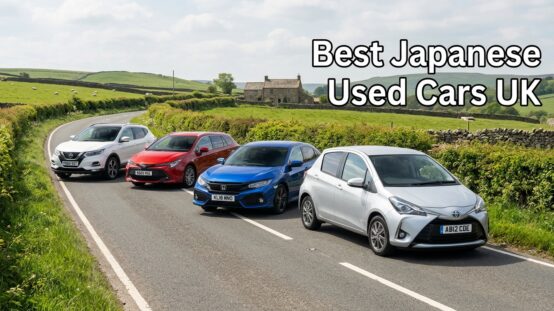
Best Japanese Used Cars for UK Drivers: Models Worth Considering
Japanese cars have earned a strong reputation among UK motorists for their dependable engineering, practical designs, economical engines and long-term usability. From compact hatchbacks suited to crowded city streets to family SUVs designed for longer motorway journeys, Japanese manufacturers offer a diverse selection of vehicles for different budgets and driving requirements.
For buyers researching the best Japanese used cars UK drivers can consider, the choice extends well beyond familiar models such as the Toyota Yaris and Honda Civic. Brands including Nissan, Mazda, Suzuki and Lexus also produce vehicles that balance comfort, efficiency and durability.
However, choosing the right used car involves more than comparing badges and asking prices. Mileage, maintenance records, insurance costs, emissions compliance and the condition of individual vehicles all influence long-term ownership costs. Imported vehicles require additional checks, particularly when their specifications differ from those of UK-market models.
This guide explores several Japanese cars worth considering and explains what UK buyers should assess before making a purchase.
Why Japanese Used Cars Appeal to UK Drivers
Japanese manufacturers have developed a strong presence in the UK by producing vehicles for a wide range of motorists. Many models combine straightforward controls, practical interiors and engines designed for years of everyday use when properly maintained.
Several factors make Japanese cars attractive in the used market:
- Dependability: Many models have established reputations for mechanical durability, although reliability varies by model year, engine and maintenance history.
- Fuel efficiency: Small petrol engines and hybrid powertrains can help reduce fuel expenditure, particularly in urban driving.
- Practicality: Hatchbacks, estates and SUVs offer options for commuters, families and drivers who need additional luggage space.
- Parts availability: Popular UK-market models often benefit from established servicing networks and readily available replacement parts.
- Resale appeal: Well-maintained examples of sought-after models can attract buyers in the second-hand market.
Nevertheless, reputation should not replace inspection. A neglected vehicle can become expensive regardless of its manufacturer, while a carefully maintained example of a less celebrated model may provide excellent value.
1. Toyota Yaris: An Excellent Choice for City Driving
The Toyota Yaris is one of the most sensible options for motorists seeking an economical, compact and easy-to-park vehicle. Its modest dimensions suit narrow residential streets, busy town centres and tight parking spaces, while newer generations offer improved safety technology and more refined interiors.
Petrol versions can appeal to buyers who prefer conventional mechanical systems, whereas hybrid variants are particularly attractive for stop-start urban journeys. The hybrid powertrain can reduce fuel consumption in traffic without requiring the driver to plug the car into a charger.
Why consider it?
- Compact dimensions make urban driving easier.
- Hybrid versions can deliver impressive fuel economy in town.
- The cabin is practical for everyday commuting.
- Toyota’s established UK servicing network makes routine maintenance convenient.
What to check: Examine the service history, suspension, brakes and tyres. For hybrid models, check the condition of the hybrid battery and obtain a diagnostic assessment if appropriate.
The Yaris is particularly suitable for commuters, first-time buyers and small households that prioritise low running costs over extensive passenger space.
2. Honda Civic: A Versatile Family Hatchback
The Honda Civic is worth considering for drivers who need more room than a typical supermini provides. Depending on the generation, it offers generous passenger space, a useful boot and a driving experience that feels composed on both urban roads and motorways.
Earlier petrol models can offer an appealing balance of performance and affordability, while newer versions introduce more sophisticated infotainment, driver-assistance systems and hybrid technology.
Among popular Japanese cars, the Civic stands out because it can serve several purposes without feeling overly specialised. It is suitable for commuting during the week and longer family journeys at weekends.
Why consider it?
- A practical interior for passengers and luggage.
- Comfortable motorway performance in suitable versions.
- A broad range of generations and engine options.
- A good balance between everyday usability and driving enjoyment.
What to check: Investigate clutch wear on manual versions, transmission behaviour on automatics, suspension condition and the maintenance history of the specific engine. Some generations have different known issues, so research the exact model year before purchasing.
3. Toyota Corolla: Efficient Everyday Motoring
The Toyota Corolla is a strong candidate for drivers who want a dependable family car with a focus on efficiency. Available in different body styles and powertrain configurations across its generations, it can suit commuters, couples and families alike.
The hybrid versions are especially appealing to motorists who spend considerable time in congested traffic. Their ability to recover energy during deceleration and operate electrically at low speeds under suitable conditions can improve urban fuel economy.
For drivers researching reliable used cars, the Corolla offers a practical combination of sensible packaging, a mature hybrid system in applicable versions and broad everyday usability.
Why consider it?
- Hybrid options can help reduce petrol consumption.
- Comfortable for commuting and longer journeys.
- Practical boot and rear-seat space, depending on body style.
- Strong appeal among buyers seeking a conventional family hatchback.
What to check: Review servicing documentation, hybrid-system condition, brake wear and the operation of safety and infotainment systems. Compare insurance quotations and vehicle tax before deciding between different generations.
4. Honda Jazz: Small Outside, Practical Inside
The Honda Jazz is a particularly useful option for drivers who value interior flexibility. Despite its compact exterior, many generations offer an accommodating cabin, an elevated seating position and clever rear-seat arrangements.
Its manageable dimensions make it suitable for city driving, but the cabin can also accommodate shopping, luggage and everyday family essentials. Hybrid versions of newer generations offer an additional efficiency advantage for motorists who frequently encounter slow-moving traffic.
The Jazz may not be the most exciting choice in the segment, but its versatility gives it considerable appeal as a practical daily vehicle.
Why consider it?
- Excellent use of interior space.
- Easy manoeuvrability and good visibility in many versions.
- Economical petrol and hybrid options, depending on generation.
- A useful choice for older drivers, small families and urban commuters.
What to check: Test the gearbox carefully, inspect the suspension and verify the service history. Automatic transmissions differ across generations, so ensure the specific transmission has been maintained correctly.
5. Mazda3: A More Engaging Driving Experience
The Mazda3 is a compelling alternative for drivers who want a practical hatchback with a more engaging driving character. Its cabin often feels well finished, while the steering and chassis can make ordinary journeys more enjoyable.
Depending on the generation, buyers can choose between different petrol and diesel engines. Petrol models may be especially suitable for motorists whose driving consists largely of short trips, although engine choice should reflect annual mileage and journey patterns.
Why consider it?
- Attractive exterior styling and a well-designed interior.
- Engaging handling compared with many everyday hatchbacks.
- Comfortable enough for regular commuting.
- Several generations available on the used market.
What to check: Inspect the bodywork and underside for corrosion, particularly on older examples. Check engine-specific maintenance requirements, clutch condition where applicable, and the operation of the infotainment and electrical systems.
The Mazda3 is worth shortlisting when driving enjoyment matters almost as much as economy and practicality.
6. Suzuki Swift: Affordable and Easy to Live With
The Suzuki Swift is a small hatchback that suits drivers looking for uncomplicated transport without the bulk of a family SUV. Its compact footprint makes it easy to manoeuvre, while its relatively modest engines can help keep fuel consumption manageable.
Some later versions feature mild-hybrid assistance, although the technology and benefits vary by model year. Buyers should compare equipment levels and safety features carefully because specifications differ between generations and trims.
Why consider it?
- Compact dimensions for urban driving.
- Generally straightforward everyday usability.
- Petrol and mild-hybrid options in relevant generations.
- A potentially affordable alternative to larger hatchbacks.
What to check: Assess clutch and gearbox operation, suspension wear, tyre condition and the service record. Check that any driver-assistance features operate correctly and that the car has the equipment expected for its trim level.
For motorists with limited parking space or a modest budget, the Swift can be a sensible candidate.
7. Nissan Qashqai: A Practical Family SUV
The Nissan Qashqai appeals to buyers who prefer a higher driving position and the flexibility of a crossover. It offers a useful compromise between a traditional hatchback and a larger SUV, making it suitable for families who want accessible seating and practical luggage space.
Different generations feature a variety of petrol, diesel, mild-hybrid, hybrid and transmission configurations. The best choice depends on whether the vehicle will spend most of its time in town, on motorways or covering a mixture of routes.
Why consider it?
- A higher seating position and convenient access.
- Useful passenger and luggage space.
- A wide selection of used examples.
- Family-oriented comfort and equipment.
What to check: Pay particular attention to the transmission type and its service requirements, especially on versions fitted with a CVT. Check for suspension noise, electrical faults and a complete maintenance record. Diesel versions used mainly for short urban trips may be less suitable because of emissions-system maintenance requirements.
The Qashqai is a reasonable option for families, provided the individual vehicle’s condition and powertrain history stand up to scrutiny.
8. Toyota RAV4: Space and Long-Distance Comfort
The Toyota RAV4 is worth considering for households that need more room, a substantial boot and the flexibility to travel with passengers and luggage. Depending on the generation, the range includes conventional petrol, diesel and hybrid configurations.
Hybrid RAV4 models can be particularly appealing for mixed driving, although purchase prices, insurance and replacement-part costs may be higher than those of smaller hatchbacks. Buyers should calculate total ownership costs rather than focusing solely on fuel economy.
Why consider it?
- Spacious cabin and practical luggage capacity.
- Comfortable for family trips and longer journeys.
- Hybrid options in relevant generations.
- Available with different drivetrain configurations, including all-wheel drive on selected versions.
What to check: Review the service history, hybrid battery condition where applicable, brakes, suspension and underbody. On all-wheel-drive versions, check the drivetrain carefully. Confirm that the vehicle’s dimensions and running costs suit everyday use.
The RAV4 is best suited to buyers who genuinely need SUV space rather than simply preferring a larger vehicle.
9. Lexus IS 300h: A Premium Hybrid Saloon
Drivers who want a more refined experience may find the Lexus IS 300h an appealing alternative to mainstream family cars. Its hybrid powertrain combines petrol and electric propulsion, while the cabin offers a more premium ambience than most compact hatchbacks.
As a used purchase, it may provide an attractive blend of comfort, efficiency and equipment. However, premium-car ownership can involve higher insurance premiums, tyre costs and repair bills.
Why consider it?
- Refined cabin and comfortable driving experience.
- Hybrid technology suited to mixed driving.
- Premium equipment and distinctive styling.
- An alternative to conventional petrol executive saloons.
What to check: Confirm the hybrid system’s condition, inspect the suspension and brakes, and obtain quotations for insurance and replacement parts. A full service history is particularly important when evaluating an older premium vehicle.
Quick Comparison: Which Japanese Car Suits Your Needs?
| Model | Best suited to | Main advantage |
|---|---|---|
| Toyota Yaris | City commuters | Compact size and efficiency |
| Honda Civic | Small families | Space and versatility |
| Toyota Corolla | Everyday family use | Hybrid efficiency and practicality |
| Honda Jazz | Urban drivers | Flexible interior |
| Mazda3 | Drivers who enjoy handling | Engaging driving experience |
| Suzuki Swift | Budget-conscious motorists | Compact, straightforward transport |
| Nissan Qashqai | Growing families | Higher seating and useful space |
| Toyota RAV4 | Larger households | SUV practicality |
| Lexus IS 300h | Premium-car buyers | Refinement and hybrid technology |
These are general recommendations rather than a universal ranking. A well-maintained example with the right specifications can be a better purchase than a newer or more expensive car with an incomplete history.
Buying a Japanese Import in the UK: What Matters Most?
Some buyers prefer vehicles already registered in Britain, while others explore imported vehicles to find different specifications, equipment levels or models that are uncommon in the domestic market.
For those considering an import from Japan, the purchase price is only one part of the calculation. Shipping, insurance, customs duty, VAT where applicable, vehicle approval, registration and any required modifications can affect the final cost. The precise requirements depend on the vehicle and its circumstances. The UK government provides guidance on importing vehicles and completing registration.
Check the Vehicle’s History
Request the available auction sheet, inspection information, mileage evidence and service documentation. Look for signs of accident repairs, corrosion, flood damage or inconsistent mileage records.
An auction grade can help describe a vehicle’s condition, but it is not a guarantee that every mechanical component is fault-free.
Confirm Registration and Approval Requirements
Check whether the vehicle requires Individual Vehicle Approval (IVA) or qualifies for an exemption. Do not assume that every imported car needs the same modifications or follows an identical registration process.
Depending on the vehicle, changes may be necessary to lighting, rear fog lamps, speedometer displays or other equipment to satisfy the applicable requirements. Establish the exact requirements before shipping the car.
Calculate the Full Ownership Cost
Include the purchase price, shipping, applicable taxes and duties, approval and registration expenses, insurance, servicing and any necessary repairs.
A vehicle that appears inexpensive at auction may not remain a bargain once all expenses are included.
Compare Specifications Carefully
Japanese-market vehicles can differ from UK-market equivalents in equipment, engine choices, infotainment systems and available parts. Right-hand drive is common in Japan, but that does not automatically mean every vehicle will meet UK registration requirements without further work.
Where Can UK Buyers Explore Japanese Used Cars?
Buyers interested in sourcing a vehicle directly from Japan can compare available models, specifications and sourcing options before making a decision. Nobuko Japan provides a starting point for exploring Japanese used cars available for UK buyers.
Before selecting a vehicle, compare its condition, equipment, mileage and estimated landed cost with similar cars already available in Britain. Request clear documentation and confirm the registration process, delivery arrangements and any additional charges in advance.
The objective is not simply to find a vehicle that looks attractive in photographs. It is to establish whether the car represents good value once it is ready for legal use on UK roads.
Final Thoughts
The best Japanese used cars for UK drivers are those that match their daily requirements, budget and expectations for long-term ownership. The Toyota Yaris and Suzuki Swift are sensible options for city driving, while the Honda Civic and Toyota Corolla offer greater versatility for everyday family use. Buyers needing additional room may prefer the Nissan Qashqai or Toyota RAV4, while the Mazda3 and Lexus IS 300h appeal to those seeking a more distinctive driving experience.
Ultimately, manufacturer reputation is only one part of a sound buying decision. Service records, mechanical condition, insurance costs, fuel economy and the availability of replacement parts deserve equal attention.
For imported models, confirming the total landed cost and UK registration requirements before purchase is particularly important. Careful research and an independent inspection can help buyers identify a vehicle that offers genuine value, rather than an attractive price that conceals expensive problems.