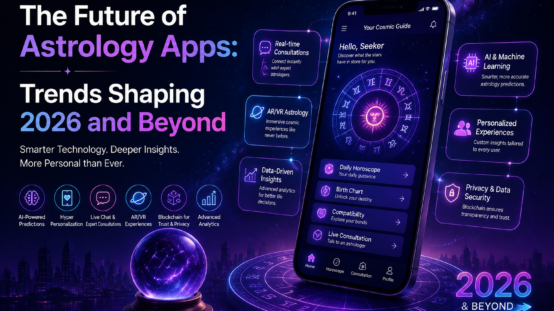
The Future of Astrology Apps: Trends Shaping 2026 and Beyond
The future of astrology apps looks nothing like the simple horoscope readers that first appeared on app stores over a decade ago. What started as a digital replacement for newspaper horoscope columns has evolved into a sophisticated, deeply personalized industry, blending ancient astrological traditions with cutting-edge technology. As user expectations continue to rise and new tools become available, astrology apps are entering a new phase of growth, one shaped by smarter personalization, richer interactivity, and a stronger focus on genuine user trust.
For businesses already in this space, or those considering entering it, understanding where astrology apps are headed is essential for staying competitive. In this article, we’ll explore the key trends shaping the future of astrology apps as we move through 2026 and beyond.
Why the Astrology App Market Continues to Grow
Interest in astrology, spirituality, and self-reflection has remained remarkably strong, particularly among younger users who are comfortable exploring these topics digitally rather than through traditional, in-person consultations. Combine that with the convenience of on-demand access, live astrologer consultations at any hour, instant personalized predictions, and compatibility checks in seconds, and it’s easy to see why this niche keeps expanding rather than fading as a passing trend.
As the market matures, though, simply offering horoscopes and live chat is no longer enough to stand out. The next generation of astrology apps needs to offer something deeper, more personalized, and more technologically advanced to keep users engaged long-term.
Key Trends Shaping the Future of Astrology Apps
1. Deeper AI-Driven Personalization
AI has already moved astrology apps beyond generic zodiac-based horoscopes, and this trend is only accelerating. Future apps are expected to analyze increasingly detailed data, birth charts, past user interactions, and even behavioral patterns, to deliver predictions that feel genuinely tailored to each individual rather than broadly applicable to an entire zodiac sign.
2. Voice and Conversational Interfaces
As voice assistant technology continues to improve, more astrology apps are expected to integrate natural, conversational voice interactions, allowing users to simply ask about their day or week and receive a spoken, personalized response. This shift makes astrology feel more like a natural conversation than navigating through static menus and screens.
3. Hyper-Personalized Notifications and Alerts
Instead of generic daily horoscope notifications sent to every user at the same time, future apps are likely to send highly individualized alerts based on specific planetary transits relevant to a user’s own birth chart, timed and worded to feel genuinely relevant rather than mass-generated.
4. Integration With Wearables and Lifestyle Data
An emerging trend involves astrology apps connecting with wearable devices and lifestyle data, such as sleep patterns, mood tracking, or activity levels, to offer insights that blend astrological guidance with real, personal data. While still early-stage, this kind of integration could make predictions feel more grounded in a user’s actual daily life.
5. Expanded Live Consultation Features
Live consultations with real astrologers remain a core revenue driver for many platforms, and this feature set continues to evolve. Expect to see smarter astrologer-matching algorithms, expanded video and voice consultation options, and improved scheduling tools that make booking a session as seamless as ordering food or booking a ride.
6. Community and Social Features
Astrology has always had a social element, people love discussing their signs, comparing charts, and sharing predictions with friends. Future apps are likely to lean further into community features, like shared compatibility reports, group chat rooms based on zodiac signs, or social sharing tools that turn personal predictions into shareable content.
7. Multi-System Astrology Support
While Western astrology remains widely popular, growing global user bases are pushing apps to support multiple astrological systems, including Vedic astrology, Chinese astrology, and numerology, within a single platform. This flexibility allows apps to serve broader, more culturally diverse audiences without requiring users to switch between separate apps.
8. Subscription and Membership Models
As the market matures, more astrology apps are shifting toward subscription-based models, offering tiered access to premium content, personalized reports, and discounted consultation rates. This provides more predictable revenue for businesses while giving loyal users a stronger sense of ongoing value.
9. Stronger Focus on Data Privacy and Trust
As astrology apps collect increasingly detailed personal data, including birth details, behavioral patterns, and sometimes payment information, users are becoming more conscious of how that data is used and protected. Apps that prioritize transparent data practices and strong security measures are likely to build stronger long-term trust compared to those that treat privacy as an afterthought.
10. Better Astrologer Verification and Quality Control
As live consultations remain a major feature, ensuring astrologer credibility becomes increasingly important. Expect more platforms to introduce stricter verification processes, transparent rating systems, and AI-assisted quality monitoring to maintain consistent service quality across their astrologer network.
What This Means for Businesses in the Astrology App Space
For businesses already operating in this space, or those planning to enter it, these trends point toward a clear direction: the future belongs to platforms that combine genuine astrological expertise with smart, thoughtful technology, rather than apps that rely on generic content or outdated features.
Investing in strong astrology app development company now means building with these future trends in mind, ensuring your platform’s architecture can support deeper AI personalization, multi-system astrology support, and expanded live consultation features as user expectations continue to evolve.
Challenges to Watch For
While these trends offer exciting opportunities, a few challenges are worth keeping in mind:
- Balancing automation with authenticity, since users still value genuine astrological insight over purely algorithm-generated content.
- Managing increased technical complexity, as features like voice interfaces, wearable integrations, and multi-system support require more sophisticated backend architecture.
- Maintaining trust at scale, particularly as platforms grow their astrologer networks and user bases across different regions and cultures.
Final Thoughts
The future of astrology apps points toward a more personalized, interactive, and technologically advanced experience than what users have grown accustomed to over the past several years. From deeper AI-driven personalization and voice interfaces to expanded live consultations and stronger data privacy practices, the platforms that adapt to these trends early will be best positioned to capture and retain a growing, increasingly discerning user base.
For businesses looking to stay ahead in this space, now is the time to start planning for these shifts, building astrology apps that aren’t just functional today, but genuinely ready for where the industry is headed in 2026 and beyond.