IGCSE Physics: The Topics That Decide the Grade
IGCSE Physics looks broad on the syllabus page, but examiners return to the same core topics every session, and those topics decide most of the marks. Students who spread revision evenly across everything often score lower than students who secure the high-weight areas first. One-to-one online tutoring works well for Physics precisely because a tutor can find which of those core topics is leaking marks for a particular student and fix it directly.
Electricity: The Topic Students Fear Most
Circuits are the single biggest mark-loser. Students mix up series and parallel rules, apply V = IR in the wrong arrangement, and lose method marks by skipping the reasoning steps examiners award. The fix is repetition with structure: draw the circuit, label what is known, state the rule, then calculate. A tutor drills that sequence until it becomes automatic, and the same sequence then works on every electricity question on the paper.
Forces and Motion: Graphs and Definitions
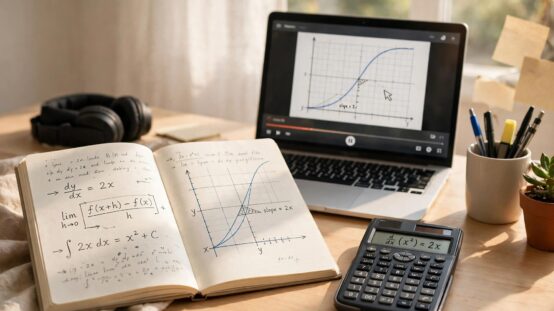
Motion graphs and force definitions carry easy marks that students throw away with vague answers. Examiners want precise language: acceleration is the rate of change of velocity, not “speeding up”. Distance-time and speed-time graphs appear in almost every paper, and reading gradients and areas under them is a learnable skill, not a talent. Short, focused practice on past-paper graph questions usually lifts this section within a few lessons.
Waves, Light and Sound
The waves unit rewards students who can move between diagrams, definitions and calculations without confusing them. The wave equation, refraction through glass blocks, and total internal reflection are standard questions with standard mark schemes. Students lose marks by describing experiments loosely; the mark scheme wants the apparatus, the measurement and the precaution, in order.
Energy, Pressure and the Practical Alternative
Energy transfers and pressure calculations form a reliable block of mid-difficulty marks. Students who learn to start every energy question by naming the stores involved, and every pressure question by writing the formula before substituting values, pick up these marks consistently. The same discipline applies to Paper 6, the alternative to practical: describing a fair test, choosing sensible apparatus and stating one precaution per experiment are formulaic answers once a student has seen the pattern across a handful of past papers.
Thermal physics and magnetism are often left to the end of the course and revised in a rush, yet their questions are among the most predictable on the paper. Conduction, convection and radiation definitions, and the rules for electromagnets, appear in near-identical form across sessions. A short, deliberate pass through these two units late in revision is one of the highest-return hours a student can spend.
How One-to-One Lessons Target the Leaks
Group revision courses cannot stop for one student’s weak topic. A one-to-one tutor can. Lessons with IGCSE physics tutors online at Combo Tutors Academy start by testing the core topics, then build a plan around the gaps found, using past papers from the student’s own board. Combo has provided one-to-one online tutoring since 2020, across IGCSE, GCSE, A Level and IB. Lessons start from $15 per hour, begin with a free 30-minute trial, and matching normally happens within 24 hours. There is a free rematch if the tutor is not a fit, and female tutors are available on request.
A Simple Revision Order That Works
Start with electricity and motion, because they appear in both papers and in the practical alternatives. Then cover waves and energy, then thermal physics and magnetism, which are shorter units with predictable questions. Finish with timed past papers, marking against the official mark scheme so the student learns what examiners actually reward.
FAQ
How early should IGCSE Physics tutoring start?
Ideally a full term before the exams, so weak topics can be rebuilt rather than crammed. Starting earlier in the course year is better still.
Does the tutor follow my exam board?
Yes. Lessons follow the student’s own board and syllabus, whether that is Cambridge or Edexcel, including the practical paper alternative where relevant.
Can tutoring help if my child is already doing well?
Yes. High attainers usually need exam technique and precision work: definitions worded exactly as mark schemes want them, and full method steps on calculations.