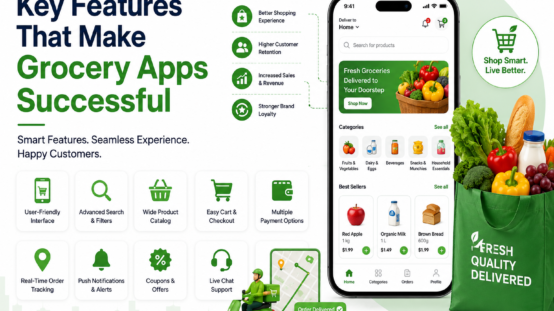
Key Features That Make Grocery Apps Successful
Grocery apps have become a daily part of life for millions of shoppers, but not every grocery app manages to hold onto its users past the first few orders. In a market crowded with options, the difference between an app that thrives and one that gets deleted after a single frustrating experience almost always comes down to features. Understanding exactly which features actually drive success, rather than just checking boxes on a feature list, is essential for any business planning to launch or improve a grocery delivery platform.
In this article, we’ll break down the key features that consistently separate successful grocery apps from the ones that struggle to retain users.
Why Feature Selection Is So Critical
Grocery shopping is a repetitive, routine activity, which means users quickly develop strong expectations for speed, accuracy, and convenience. Unlike a one-time purchase app, a grocery platform needs to earn repeat usage week after week, sometimes multiple times a week. That means every friction point, an out-of-stock item that wasn’t flagged, a confusing checkout process, a late delivery, chips away at user trust and increases the chance they’ll switch to a competitor.
Working with the best grocery delivery app development company that understands which features genuinely impact retention, rather than just following a generic template, makes a significant difference in long-term success.
Must-Have Customer-Facing Features
1. Fast, Accurate Product Search
With grocery apps often listing thousands of products, a fast and forgiving search function is essential. Users should be able to search by category, brand, or even partial and misspelled product names and still get relevant results quickly.
2. Real-Time Inventory Accuracy
Few things damage trust faster than a customer adding items to their cart only to discover later they’re out of stock. Real-time inventory syncing between the app and actual store stock levels is one of the most important features for maintaining a reliable shopping experience.
3. Flexible Delivery Scheduling
Not every customer wants delivery within the hour, some prefer scheduling a slot for later in the day or week. Offering flexible delivery windows, including same-day and scheduled options, improves satisfaction and helps distribute order volume more evenly throughout the day.
4. Multiple Payment Options
Providing a range of secure payment methods, cards, digital wallets, UPI, and cash on delivery depending on the market, reduces friction at checkout and helps prevent cart abandonment.
5. Live Order Tracking
Customers expect to see real-time updates on their order, from confirmation and packing to dispatch and final delivery, along with an accurate estimated arrival time. This transparency significantly reduces customer anxiety and support inquiries.
6. Easy Reordering and Saved Lists
Since grocery shopping is repetitive by nature, features like saved shopping lists, favorite items, and one-tap reordering of past purchases make the experience noticeably more convenient, encouraging users to return rather than switch to a competitor out of habit.
7. Substitution Preferences
Because product availability can change quickly, allowing customers to set preferences for substitutions, or opt out of them entirely, helps avoid disappointment when a specific item isn’t available at packing time.
8. Personalized Recommendations
AI-driven product suggestions based on past purchase history help customers discover relevant items faster and often increase average order value, while making the shopping experience feel more tailored rather than generic.
Features That Strengthen Business Operations
1. Robust Admin and Inventory Management
Behind the scenes, an efficient admin dashboard for managing product catalogs, pricing, and stock levels is essential for keeping operations running smoothly, especially as the product range grows.
2. Delivery Partner Route Optimization
AI-powered route optimization helps delivery partners handle multiple orders efficiently, reducing delivery times and operational costs while improving the overall customer experience.
3. Analytics and Reporting Tools
Detailed reports on sales trends, popular products, and peak ordering times help businesses make informed decisions about inventory planning, staffing, and marketing strategies, rather than relying on guesswork.
4. Promotions and Discount Management
The ability to easily create and manage discount codes, seasonal promotions, or loyalty rewards helps drive engagement and encourages repeat purchases without requiring constant manual intervention.
Features That Build Long-Term Loyalty
1. Loyalty and Rewards Programs
Points-based systems, cashback offers, or exclusive discounts for frequent shoppers give customers a reason to keep choosing your app over competitors, particularly in a market where switching between grocery apps is relatively easy.
2. Push Notifications Done Right
Timely, relevant notifications, order updates, restock alerts for favorite items, or personalized offers, help keep users engaged without becoming intrusive or overwhelming, since poorly managed notifications often lead to users disabling them entirely.
3. Multi-Language Support
For businesses operating in diverse markets, offering the app in multiple languages significantly broadens the potential user base and improves accessibility for non-native speakers.
Advanced Features Worth Considering
As grocery app development continues to evolve, a few advanced features are becoming increasingly common among market leaders:
- Voice search for hands-free product searching
- Subscription-based recurring orders for regularly purchased essentials
- In-app chat support for quick resolution of order issues
- Smart cart suggestions, reminding users of frequently forgotten items based on past orders
How to Prioritize Features When Building Your App
Not every feature needs to launch simultaneously. Most successful grocery apps start with a strong Minimum Viable Product (MVP) focused on core functionality, search, cart, checkout, and basic order tracking, before gradually adding more advanced features based on real user feedback and behavior. This approach allows businesses to launch faster while still building toward a fully-featured platform over time.
Working with a knowledgeable grocery app development company helps ensure this prioritization is handled strategically, focusing development resources on the features that will genuinely move the needle for user retention and business growth, rather than spreading effort too thin across a long feature list.
Final Thoughts
The features that make grocery apps successful go well beyond a basic ordering and checkout flow. From real-time inventory accuracy and flexible delivery scheduling to personalized recommendations and loyalty programs, each feature plays a role in building the kind of reliable, convenient experience that keeps customers coming back week after week.
For businesses planning to build or improve a grocery app, focusing on these proven, high-impact features, rather than simply matching a competitor’s feature list, is the key to building a platform that genuinely earns long-term customer loyalty in an increasingly competitive market.