Education

Detector de IA What Happens When Human Writing Looks Artificial?

AI-generated writing has changed the way people think about authorship. A person can now use AI to brainstorm an idea, organize research, improve a rough draft, or generate a starting point for an article. The finished piece may then go through several rounds of human editing before anyone else reads it.

That makes AI detection more complicated than simply asking whether a sentence was produced by a machine. A detector de ia looks for patterns that may resemble AI-generated writing, but those patterns do not exist in isolation. The writer’s style, the length of the text, the subject, and the editing process can all affect what a detection system sees.

AI Detection Is Not a Hidden Label

There is no invisible tag inside an article that tells a detector where every sentence came from. Instead, detection systems examine characteristics of the writing and estimate whether those characteristics are more consistent with AI-generated text.

That distinction is important. A detection result represents an assessment, not a complete record of authorship. Two pieces written by different people can produce very different results, while heavily edited AI content may look quite different from the original machine output.

Why Good Human Writing Can Still Raise Questions

Human writing is not always unpredictable or stylistically diverse.

A university student may follow a formal structure throughout an assignment. A lawyer may use precise and repeated terminology because changing the wording could alter the meaning. A technical writer may deliberately avoid casual language and rely on consistent sentence patterns.

These characteristics can sometimes make human writing appear more structured than expected.

Language background can also matter. Someone writing in a second language may use familiar sentence patterns or a smaller range of vocabulary even when every sentence is completely their own. This is why a detection result should be considered alongside the circumstances surrounding the content.

The Hardest Cases Are Often Hybrid

The real challenge appears when humans and AI contribute to the same piece of writing.

Imagine a writer who asks AI to create an outline, researches the subject independently, writes most of the article, and then uses AI to improve a few awkward sentences. Another writer may begin with an AI-generated draft but replace most of it with original research and personal observations.

Both have used AI, but their writing processes are completely different.

A detector de ia may identify characteristics associated with machine-generated language, but it cannot always explain the history behind those words. That history matters when the result is being used for an editorial, academic, or professional decision.

A Score Should Start a Review, Not End One

This is where people can easily misunderstand AI detection.

If a piece receives a high AI likelihood score, the sensible response is not necessarily to reject it immediately. A closer review can reveal whether the content contains original research, personal experience, unusual wording, factual inconsistencies, or sudden changes in style.

The same principle works in reverse. A low detection result does not automatically make content accurate or original. Poorly researched human writing is still poor writing, regardless of how it scores.

Isgen useful during this process because they give reviewers another signal to consider. The value comes from using that signal alongside human judgment rather than treating a percentage as definitive proof.

The Bigger Issue Is Quality, Not Just Authorship

The discussion around AI detection sometimes becomes too focused on whether content “passes” a detector. That can distract from the questions that matter more to readers.

Does the article contain useful information? Are the claims supported? Does the writer bring something original to the subject? Is the explanation clear enough for the intended audience? Does the content actually answer the reader’s question?

Those standards matter whether AI was involved or not.

A completely human-written article can be repetitive and inaccurate. An AI-assisted article can be valuable when a knowledgeable person checks the information, adds genuine insight, and takes responsibility for the final result.

What Comes Next for AI Detection?

AI writing will continue to evolve, and detection will have to evolve with it. As generated text becomes more varied and people become more involved in editing it, the simple division between “human” and “AI” content will become increasingly difficult to maintain.

That does not make detection pointless. It makes interpretation more important.

A detector de ia can help identify writing patterns that deserve a closer look, but the strongest evaluation combines technology with context and human judgment. The future is unlikely to produce a perfect test that can explain the origin of every sentence. It is more likely to produce better tools for understanding content—and better ways for people to decide what those results actually mean.

How to Choose a Career Wisely in 2026 A Practical Guide to Building a Future-Ready Career

How to Choose a Career Wisely in 2026: A Practical Guide to Building a Future-Ready Career

Choosing a career is one of the most important decisions a student or professional can make. Yet many people still approach it with a simple question:

“Which career has the highest salary?”

That question is understandable—but it is not enough.

A career decision should consider much more than salary. Your interests, abilities, personality, education, financial circumstances, preferred lifestyle, job-market demand, future skill requirements, and opportunities for growth all matter.

This is particularly important in 2026. The world of work is changing rapidly because of artificial intelligence, automation, digitalisation, demographic changes, new business models and evolving employer expectations.

The result is a career landscape in which choosing a degree is no longer the same thing as choosing a career.

A student can have a good academic qualification and still struggle to find suitable employment. At the same time, someone who develops the right combination of technical, human and industry-specific skills can create opportunities across multiple career paths.

So, how can you choose a career wisely?


The Career Market Is Changing Faster Than Ever

The traditional idea of choosing one profession and following the same path for 30 or 40 years is becoming less realistic.

The World Economic Forum’s Future of Jobs Report 2025, based on information from more than 1,000 companies, estimates that by 2030 around 22% of today’s jobs will be disrupted, with approximately 170 million jobs created and 92 million displaced, resulting in a net increase of 78 million jobs globally.

The report also estimates that nearly 40% of the skills required for jobs are expected to change. Employers identify skills gaps as one of their biggest barriers to transformation.

This does not mean that technology will simply eliminate jobs.

It means that the tasks people perform—and the skills employers value—are changing.

AI, big data and cybersecurity are among the fastest-growing technical skill areas. At the same time, human capabilities such as analytical thinking, creativity, resilience, flexibility and leadership remain highly valuable.

This creates an important lesson:

Don’t choose a career only for the job title. Choose a career based on the skills, problems and value you want to develop.


India’s Career Challenge: More Education, But More Competition

India’s situation makes career planning particularly important.

The State of Working India 2026 from Azim Premji University highlights a major transition: more young Indians are receiving higher education, but the growth in graduate-level employment has not kept pace with the growth in the number of graduates.

The report finds that graduate unemployment remains particularly high among young people. Among 15–25-year-olds, graduate unemployment is close to 40%, while among 25–29-year-olds it is around 20%. At the same time, graduates generally earn substantially more than non-graduates over their working lives.

This presents an important paradox:

Education matters—but education alone is not enough.

A degree can open a door. Skills, experience, communication, problem-solving ability and evidence of what you can actually do increasingly determine what happens after you enter that door.

India is also approaching an important demographic transition. According to the same report, the country’s working-age population is expected to begin declining after 2030, making the coming years particularly important for converting India’s large young population into productive employment.

For students, this means career planning should begin before graduation—not after.


So, What Does It Mean to Choose a Career Wisely?

Choosing wisely does not mean predicting exactly what your job will be 10 years from now.

Nobody can do that with certainty.

Instead, wise career planning means finding the intersection between:

Who you are + What you can become good at + What the market needs + The lifestyle you want.

Think about career choice as a four-part equation.

1. Self

Understand your:

  • Interests
  • Personality
  • Strengths
  • Weaknesses
  • Values
  • Motivation
  • Learning style
  • Work preferences

2. Skills

Ask:

  • What am I naturally good at?
  • What skills can I develop?
  • What skills do employers need?
  • What skills will remain valuable as technology changes?

3. Market

Research:

  • Current job demand
  • Salary ranges
  • Industry growth
  • Location opportunities
  • Required qualifications
  • Future skill requirements
  • Competition
  • Automation and AI exposure

4. Lifestyle

Consider:

  • Working hours
  • Location
  • Travel requirements
  • Remote/hybrid possibilities
  • Income expectations
  • Work-life balance
  • Job stability
  • Entrepreneurship opportunities

A career that looks excellent on paper may still be wrong for you if it conflicts with your personality, values or preferred lifestyle.


Step 1: Start With Self-Understanding

One of the biggest career mistakes is starting with a course instead of starting with yourself.

Students often ask:

“Which course should I take?”

A better first question is:

“What kind of work would suit me?”

For example, someone who enjoys analysing information may explore careers involving data, finance, research, technology or business analysis.

Someone who enjoys working with people might consider areas such as:

  • Human resources
  • Sales
  • Teaching
  • Counselling
  • Healthcare
  • Customer success
  • Marketing
  • Public relations

Someone who enjoys creating things could explore:

  • Design
  • Content
  • Architecture
  • Product development
  • Media
  • Advertising
  • UX/UI

These are not rigid categories.

People are multidimensional.

That is why career assessments can be useful when they are used as one source of evidence rather than as a final verdict.

Personality assessments, aptitude tests, interest inventories and skills assessments can help identify patterns—but they should be combined with real-world exploration.


Step 2: Don’t Confuse Interest With Career Fit

“I like biology” does not automatically mean you should become a doctor.

“I like computers” does not automatically mean you should become a software developer.

“I like talking to people” does not automatically mean you should choose sales.

An interest is a starting point—not a career decision.

Suppose a student loves psychology.

Possible directions could include:

  • Psychology
  • Counselling
  • Human resources
  • Organisational behaviour
  • Research
  • Behavioural science
  • Marketing
  • User research
  • Education
  • Mental-health-related professions

The same interest can lead to many different careers.

Therefore, instead of asking:

“What subject do I like?”

ask:

“What problems do I enjoy solving?”

That question can reveal much more.


Step 3: Research the Reality of the Career

Never choose a career based solely on social media, relatives, advertisements or what sounds prestigious.

Research the actual profession.

For every career you’re considering, find out:

Education

  • What degree is required?
  • Is postgraduate education necessary?
  • Are professional certifications important?

Skills

  • What technical skills are required?
  • What soft skills are expected?
  • What tools or technologies are commonly used?

Job Market

  • How many opportunities exist?
  • Which industries hire these professionals?
  • Which locations have opportunities?
  • Is demand increasing or declining?

Compensation

Look beyond the highest salary advertised online.

Research:

  • Entry-level salaries
  • Median salaries
  • Experienced professional salaries
  • Freelance opportunities
  • Entrepreneurial possibilities

Work Reality

This is often ignored.

Ask someone actually working in the profession:

  • What does a normal working day look like?
  • What are the difficult parts?
  • What skills are most important?
  • What do you wish you had known before entering the profession?

This kind of conversation can reveal more than hours of reading career websites.


Step 4: Study the Future, Not Just the Present

A career may be popular today but less attractive five or ten years from now.

Therefore, career research should include future trends.

The World Economic Forum’s 2025 research highlights strong growth in areas including AI and big data, networks and cybersecurity, while human skills such as creative thinking, resilience and adaptability remain important.

The lesson is not:

“Everyone should work in AI.”

The lesson is:

Technology is becoming part of almost every profession.

A healthcare professional may need digital health skills.

A marketer may need analytics and AI tools.

An accountant may need automation and data skills.

A lawyer may need technology and legal-tech knowledge.

A teacher may need digital learning skills.

A designer may work with generative AI.

Therefore, the future may belong less to people who choose a purely “traditional” or “technical” career and more to people who develop hybrid capabilities.


Step 5: Build a Combination of Technical and Human Skills

Technical skills are important.

But technical skills alone may not be enough.

Recent research on generative AI and job requirements has found that roles explicitly involving GenAI can have increased requirements for cognitive and social skills. One 2025 study of job postings from U.S. firms found higher requirements for cognitive skills and increased demand for social skills in GenAI-related roles.

This reinforces an increasingly important career principle:

Learn to work with technology, not simply compete against it.

For example:

A finance professional

Should understand:

  • Financial analysis
  • Excel
  • Data analytics
  • AI-assisted workflows
  • Communication

A marketer

Could develop:

  • Marketing strategy
  • Consumer psychology
  • Digital analytics
  • Content creation
  • AI tools

A healthcare professional

May benefit from:

  • Domain knowledge
  • Digital health
  • Data interpretation
  • Communication
  • Technology awareness

A software professional

Needs more than coding.

They may also need:

  • Problem-solving
  • System thinking
  • Communication
  • Product understanding
  • Collaboration
  • AI-assisted development

The strongest career profile increasingly looks like:

Domain expertise + Technology + Human skills


Step 6: Don’t Choose a Career Only Because It Pays Well

Salary is important.

Financial stability matters.

But salary alone is a weak career-selection strategy.

Imagine two careers:

Career A: ₹12 lakh starting salary, but you strongly dislike the daily work.

Career B: ₹7 lakh starting salary, but the work matches your strengths and gives you opportunities to develop valuable skills.

Which one is better?

There is no universal answer.

Career B may eventually lead to greater satisfaction and higher earning potential—but Career A could be the right choice for someone else.

The point is not to ignore salary.

It is to evaluate salary alongside:

  • Growth
  • Stability
  • Skill development
  • Interest
  • Work environment
  • Lifestyle
  • Long-term opportunities

Think about career value, not just first-year salary.


Step 7: Test a Career Before Committing

One of the smartest ways to make a career decision is to experiment before making a major investment.

Before committing to a four-year degree or expensive professional course, try to experience the field.

You can:

  • Take a short introductory course
  • Complete a project
  • Attend a workshop
  • Speak to professionals
  • Volunteer
  • Try an internship
  • Shadow someone
  • Participate in competitions
  • Join a professional community
  • Work on a small freelance project

This is particularly important because career aspirations are often based on limited exposure.

The OECD’s research on career guidance emphasises the importance of exploring, experiencing and thinking about the future. Its analysis finds links between career development during adolescence and later employment outcomes, and highlights the value of first-hand exposure to working life.

In simple terms:

Don’t just imagine a career. Experience it.


Step 8: Choose Skills Before Choosing Job Titles

Job titles change.

Skills transfer.

For example, someone who develops:

  • Data analysis
  • Communication
  • Business understanding
  • Problem-solving
  • Presentation skills

may eventually work as:

  • Business analyst
  • Data analyst
  • Marketing analyst
  • Operations analyst
  • Product analyst

Similarly, strong communication, sales and relationship-management skills can open multiple career paths.

This makes your career more resilient.

Instead of saying:

“I want to become a particular job title.”

Try saying:

“I want to become highly capable in this combination of skills and solve these types of problems.”

That gives you flexibility.


Step 9: Understand Employability

A degree tells an employer what you studied.

Employability demonstrates what you can do.

Recent Indian data shows why this distinction matters.

A 2025 Mercer | Mettl report covering more than 2,700 campuses and over one million learners found that Indian graduates had an employability rate of 46.1% for AI/ML roles, the highest among the technical categories examined. The report also highlighted strengths in communication, critical thinking and leadership, while identifying creativity as an area needing improvement.

The message is clear:

The labour market rewards demonstrated capability.

Therefore, students should build evidence of their abilities through:

  • Projects
  • Internships
  • Portfolios
  • Certifications
  • Competitions
  • Research
  • Freelance work
  • Volunteering
  • Practical assignments

A resume becomes much stronger when it can answer:

“What have you actually done?”


Step 10: Don’t Ignore Emerging Careers

Many students still evaluate careers using a narrow list:

  • Doctor
  • Engineer
  • Lawyer
  • Teacher
  • Accountant
  • Government employee

These remain legitimate career options.

But today’s economy contains many additional pathways.

Depending on your interests and qualifications, emerging or expanding areas include:

  • Artificial intelligence
  • Data analytics
  • Cybersecurity
  • Cloud computing
  • Renewable energy
  • Digital healthcare
  • Healthcare technology
  • FinTech
  • Product management
  • UX/UI
  • Digital marketing
  • Business analytics
  • Supply-chain technology
  • Sustainability
  • AI governance
  • Digital education
  • Robotics
  • Biotechnology

The WEF’s 2025 research also points to growth across technology, healthcare, green-transition and other sectors—not simply technology alone.

That means students should avoid the assumption that “future careers = coding.”

The future will need people who can solve problems across many industries.


Step 11: Consider the Location Factor

Career opportunities are not distributed equally.

A particular career might have excellent opportunities in Bengaluru, Hyderabad, Mumbai or Delhi but fewer opportunities in a smaller city.

However, remote work, global teams and digital platforms are changing this equation.

When researching a career, ask:

  • Where are the jobs?
  • Can this profession be done remotely?
  • Is relocation necessary?
  • Are international opportunities available?
  • Can I work independently?
  • Can I build a business around this skill?

Location should be part of career planning—not an afterthought.


Step 12: Think About Career Resilience

Nobody can guarantee that a career will remain unchanged.

Instead of asking:

“Is this career completely safe from AI?”

ask:

“If technology changes this profession, can I adapt?”

A resilient professional develops:

  1. Strong domain knowledge
  2. Digital literacy
  3. Continuous learning habits
  4. Communication skills
  5. Problem-solving ability
  6. Adaptability
  7. Professional networks

The ILO’s World Employment and Social Outlook 2025 also highlights continuing labour-market challenges, including youth unemployment and unequal access to decent employment. Global unemployment remained broadly stable, while youth unemployment remained substantially higher.

This reinforces why career preparation should not end with graduation.


A Simple Career Decision Framework

If you are currently considering several careers, score each option from 1–10.

Factor Career A Career B Career C
Interest /10 /10 /10
Strength alignment /10 /10 /10
Personality fit /10 /10 /10
Job demand /10 /10 /10
Future potential /10 /10 /10
Income potential /10 /10 /10
Education cost /10 /10 /10
Time required /10 /10 /10
Lifestyle fit /10 /10 /10
Growth opportunities /10 /10 /10
Total /100 /100 /100

This does not mathematically determine your career.

It forces you to think beyond one emotional factor.


The 5 Questions Every Student Should Ask

Before choosing a career, answer these five questions honestly:

1. What am I naturally interested in?

Not what your friends like.

Not what is trending on Instagram.

Not what your relatives recommend.

What genuinely holds your attention?

2. What am I capable of becoming good at?

You don’t need to be excellent today.

Ask what you are willing and able to develop.

3. Does the market need these skills?

Interest without opportunity can create frustration.

Research actual labour-market demand.

4. What lifestyle do I want?

Your career determines a large part of how you spend your time.

Think about location, working hours, travel, income and flexibility.

5. What happens if the industry changes?

A strong career choice should leave room for learning and adaptation.


What Parents Should Do Differently

Parents have an important role in career decisions—but guidance should not become pressure.

Statements such as:

“Become a doctor.”

“Engineering has more scope.”

“Government jobs are safest.”

“Everyone is doing computer science.”

may come from good intentions.

But the labour market is changing too quickly for one-size-fits-all advice.

Parents can help more effectively by asking:

  • What subjects do you enjoy?
  • What activities energise you?
  • What problems do you like solving?
  • What careers have you researched?
  • Have you spoken with someone working in that field?
  • What skills does that career require?
  • What alternatives have you considered?

The goal is not to make the decision for the child.

The goal is to help the child learn how to make good decisions.


What Students Should Stop Doing

If you want to make a wiser career decision, avoid these common mistakes:

 Choosing because friends chose it

Your friend’s strengths and goals are not necessarily yours.

 Choosing only because of salary

High salary does not automatically mean high satisfaction.

 Choosing only because of family pressure

Your family can provide valuable perspective, but you will ultimately live the career.

 Choosing based on one personality test

No test can predict your entire professional future.

 Ignoring the job market

Passion matters, but so does economic reality.

 Waiting until graduation

Career preparation should begin before the final semester.

 Assuming a degree guarantees employment

Current Indian labour-market evidence shows that education-to-employment transitions can remain difficult even for graduates.

 Treating AI as either the enemy or the solution

AI is neither automatically going to eliminate every career nor automatically create success.

Learning to use it intelligently is becoming part of career readiness.


Career Choice Is Not a One-Time Decision

One of the most important changes in modern careers is that people increasingly change directions.

You may:

  • Change industries
  • Learn a new skill
  • Move into management
  • Become a specialist
  • Start a business
  • Freelance
  • Return to education
  • Move internationally
  • Transition into a new profession

Therefore, choosing a career at 17 or 18 does not mean you have permanently decided what you will do at 40.

Your first decision should create options, not eliminate them.


The Best Career Strategy for 2026

If we combine the major findings from recent labour-market research, a practical strategy emerges.

Build a strong foundation

Get the education or qualification required for your chosen field.

Develop marketable skills

Don’t stop at classroom knowledge.

Gain real experience

Internships, projects and practical exposure matter.

Learn technology

AI and digital tools are becoming relevant across industries.

Strengthen human skills

Communication, critical thinking, creativity, collaboration and adaptability remain valuable.

Build evidence

Create a portfolio of what you can actually do.

Keep learning

Your first qualification will not be your final qualification.

Monitor the market

Review industry trends periodically.


Final Thought: Don’t Choose the “Best” Career—Choose the Right Career for You

There is no single best career.

There is no universally perfect degree.

There is no guaranteed profession.

And there is no career that will remain completely unchanged.

The better question is:

“Which career aligns with who I am, what I can become good at, the life I want, and the problems the world will continue to need solved?”

That is a much stronger foundation for career planning.

In 2026, career success is increasingly less about simply possessing a qualification and more about combining education, skills, experience, adaptability and self-awareness.

The future belongs not necessarily to those who predict the future perfectly, but to those who are prepared to learn, adapt and create value as the future changes.

So before choosing your next course, degree or profession, pause.

Research.

Explore.

Talk to professionals.

Test your interests.

Understand the market.

Evaluate your strengths.

And then make an informed decision.

A career should not simply be chosen. It should be researched, tested and intentionally built.
Criminal Law Assignment Help for Top Grades and Academic Success

Introduction

Criminal law is one of the most challenging and significant branches of legal studies. It focuses on crimes, punishments, legal procedures, and the rights of individuals within the justice system. Students pursuing law degrees are expected to understand complex legal concepts, analyze case laws, and apply legal principles to real-life situations. However, balancing multiple assignments, examinations, and practical training often makes it difficult to complete criminal law assignments effectively. This is where professional criminal law assignment help becomes a valuable academic resource.

Expert assistance allows students to improve their understanding of legal concepts while producing well-structured, plagiarism-free assignments that meet university standards.

Why Criminal Law Assignments Are Challenging

Criminal law assignments require more than theoretical knowledge. Students must demonstrate critical thinking, legal analysis, and research skills. Understanding criminal statutes, judicial decisions, and legal precedents can be overwhelming, especially when deadlines are approaching.

Some common challenges include:

  • Interpreting complex criminal statutes
  • Analyzing landmark court cases
  • Applying legal principles to practical scenarios
  • Conducting accurate legal research
  • Referencing legal sources correctly
  • Managing multiple academic deadlines

Because of these difficulties, many students seek professional guidance to enhance the quality of their academic work.

Benefits of Professional Criminal Law Assignment Help

Professional assignment support offers several advantages for law students. Experienced legal writers understand academic expectations and can present legal arguments in a clear and logical manner.

Some major benefits include:

  • High-quality legal research
  • Well-organized assignment structure
  • Proper citation using required referencing styles
  • Original and plagiarism-free content
  • Timely delivery before submission deadlines
  • Improved understanding of criminal law concepts
  • Better academic performance

These services not only help students complete assignments but also strengthen their legal writing and analytical abilities.

Topics Covered in Criminal Law Assignments

Criminal law covers a broad range of legal subjects. Professional assignment experts can assist students with various topics across undergraduate and postgraduate law programs.

Popular criminal law topics include:

  • Criminal liability
  • Actus reus and mens rea
  • Homicide and murder laws
  • Theft and property offences
  • Assault and battery
  • White-collar crime
  • Cybercrime legislation
  • Drug-related offences
  • Criminal defenses
  • Juvenile justice
  • Sentencing principles
  • Human rights in criminal justice
  • International criminal law
  • Evidence law
  • Police powers and criminal procedure

Each topic requires thorough legal analysis supported by relevant statutes and judicial precedents.

Features of a High-Quality Criminal Law Assignment

A well-written criminal law assignment follows a logical structure and demonstrates legal reasoning throughout the discussion.

An excellent assignment generally includes:

  • A clear introduction outlining the issue
  • Strong legal arguments supported by evidence
  • Relevant case law analysis
  • References to statutes and legal authorities
  • Critical evaluation of different viewpoints
  • Logical conclusion summarizing key findings
  • Accurate citations and bibliography

Maintaining clarity, coherence, and legal accuracy is essential for achieving higher grades.

Importance of Legal Research

Research is the foundation of every criminal law assignment. Students must consult reliable legal sources to support their arguments and demonstrate a sound understanding of the subject.

Useful research sources include:

  • Criminal law textbooks
  • Academic journals
  • Government legislation
  • Court judgments
  • Legal databases
  • Law commission reports
  • Scholarly articles

Using credible and up-to-date references increases the academic value and reliability of the assignment.

How Expert Assistance Improves Academic Performance

Professional academic assistance goes beyond completing assignments. It helps students understand legal concepts through well-explained arguments and practical examples. By reviewing expertly written assignments, students can improve their own writing style, research techniques, and analytical skills.

Additionally, expert guidance reduces academic stress and enables students to focus on examinations, internships, and other important responsibilities without compromising assignment quality.

Tips for Writing Criminal Law Assignments

Students can improve the quality of their criminal law assignments by following a structured writing process.

Consider these useful tips:

  • Read the assignment instructions carefully.
  • Conduct comprehensive legal research.
  • Prepare a logical outline before writing.
  • Support arguments with relevant case laws.
  • Use clear and formal academic language.
  • Avoid plagiarism by citing all sources correctly.
  • Proofread the assignment before submission.
  • Ensure the conclusion addresses the assignment objectives.

Following these practices can significantly enhance the overall quality of legal assignments.

Choosing Reliable Criminal Law Assignment Help

Selecting a trustworthy academic assistance service is important for achieving the best results. Students should evaluate several factors before choosing a provider.

Look for services that offer:

  • Qualified legal experts
  • Original content
  • Confidentiality
  • Affordable pricing
  • Timely delivery
  • Multiple revision options
  • Positive customer reviews
  • Excellent customer support

A reliable service ensures academic integrity while helping students meet university requirements.

Conclusion

Criminal law assignments demand extensive research, legal analysis, and strong academic writing skills. The complexity of legal principles, combined with strict deadlines, often creates significant challenges for students. Professional criminal law assignment help provides expert guidance, improves assignment quality, and supports academic success through accurate legal research and well-structured content.

Whether you need assistance with criminal liability, case law analysis, legal research, or referencing, expert support can help you develop a deeper understanding of criminal law while achieving better grades. By combining professional guidance with consistent learning, students can confidently overcome academic challenges and build a strong foundation for a successful legal career.


Why a Bachelor of Applied Arts is the Key to a Creative Career (And Why It’s Not Just Painting!)

Try telling your family you want to study “Arts.” Mostly, you’ll just get a worried look followed by, “but how will you earn?”. We all know how much desi parents panic when they hear the word ‘Arts’. So I want to clear the air about the Bachelor of Applied Arts and show you why it’s actually a brilliant career move, not a backup plan.In fact, many reputed design institutes now prepare students with practical skills that match the needs of modern creative industries.

What People Think It Is

Tell someone you are pursuing a Bachelor of Applied Arts, and everyone jumps to the same wrong conclusions:

  • “So you paint stuff?” People literally picture you with a palette, staring at a canvas all day making landscapes.
  • “It’s Just Manual Craft Work:” There’s a huge misconception that the entire degree is just cutting paper, making clay models, and doing basic arts and crafts.
  • “It’s Limited to a Canvas:” Society thinks an artist’s world begins and ends at a painting canvas.
  • “There’s no money in it:” This is the worst one. People brush it off as some fun weekend activity. They have zero clue about the thousands of high-paying jobs waiting for artists right now.

But look around, the world has changed. “Applied” means putting creativity to work. You aren’t just making pretty pictures; you are building things that companies use to sell products and solve actual business problems.

The Real Picture: Where a Bachelor of Applied Arts Actually Takes You

In today’s digital and brand-obsessed age, the demand for a Bachelor of Applied Arts graduate is just as high as the demand for tech professionals. Here is the actual goldmine of careers this degree unlocks for you:

  1. UI-UX & Website Design Think about the apps you use daily. Someone had to map out where every button goes and how the screens transition. That’s what UI/UX designers do—they engineer the user’s digital journey. This degree teaches you the psychology of colors, typography, and user behavior needed for this highly paid tech job.
  2. Graphic Design Think about the cool snack packaging you bought yesterday or those viral brand posts on Instagram. A graphic designer planned all of that. They basically design the stuff that makes you remember a brand just by looking at its colors. It’s all about creating that instant connection.
  3. Communication Design This is a step ahead of graphic design. Communication designers build entire advertising campaigns. You basically become the visual voice of a brand. You use things like posters, videos, and online ads to tell a story. The goal is simple: make the audience care enough to actually buy the product or service.
  4. Motion Graphics If regular graphics are good, moving graphics are even better! You know those catchy animated logos on YouTube or the cool text effects in TV commercials? That’s motion graphics. It’s basically taking standard art and making it move. Literally every media agency out there is hiring for this right now because video content is huge.
  5. Commercial Photography A Bachelor of Applied Arts doesn’t just teach you how to click pictures; it teaches you how to “compose” a shot. From high-fashion magazine shoots and commercial product photography for Amazon, to massive travel and documentary projects—this degree gives you the perfect understanding of lighting, frames, and visual aesthetics that separates a pro from someone who just owns a DSLR.
  6. Set Design & Exhibition Design Think outside the digital screen! You know those massive movie sets or big concert stages? Someone has to plan exactly how they look and feel. Exhibition and set designers take a plain, empty room and build a whole new vibe inside it. It is all about knowing how to arrange a physical space so it looks good on camera and in real life.
  7. Teaching & Government Jobs If your family is still stressing over job safety, just bring up the sarkari naukri angle. Having a Bachelor of Applied Arts means you can easily apply to be an art teacher in state boards or schools like Kendriya Vidyalayas. Plus, if you go on to do your Master’s and clear the NET exam, you can easily become a professor in top universities and design colleges. It’s a highly respected, secure path with great pay and benefits.

Conclusion

So to wrap it all up, a Applied Arts Course is basically the bridge between your raw creativity and today’s technology. You literally learn how to make money out of your ideas.

If you want to build a successful career in this field, choosing the right institute with experienced faculty, practical training, and industry exposure can make a big difference. Next time a relative questions your degree choice, just smile and tell them you’re stepping into the tech and design world. You’ll be the one designing the apps on their phones and the brands they shop from. The industry is literally hunting for fresh creative talent right now!

Important Questions from First Week of Embryonic Development

In this article, let’s discuss today some important questions related to the first week of embryonic development and these are the basic questions also. So, the first question you can see here when does a secondary oocyte complete its second meiotic division to become a mature ovum? So, these are the options.

Very important is the calcium wave in oocyte. So here you can see here that this calcium wave in oocyte when it begins that is when this pump so here penetrates this corona radiata cell layer and the zona pellucida and when it makes contact with the foetal end membrane. So therefore, we’ve written so here it is written that the calcium wave in oocyte begins or happens after penetration of corona radiata cell layer and zona pellucida and the result of this calcium wave in oocyte is that so here basically it causes the resuming of second meiotic division of oocyte and you already know that so here due to the second meiotic division of oocyte only that is secondary oocyte converted into a mature ovum.

So therefore, the correct answer is the at fertilisation. Why? Because that this penetration of so here a penetration of zona pellucida is also a step of so here penetration of zona pellucida is also a step of fertilisation. So now you can see here the correct answer is option C and now for understanding I’ve written in this way so here see that is when the sperm penetrates the zona pellucida then calcium wave of oocyte occurs and this calcium wave of oocyte resumes the second meiosis sorry meiosis to the secondary oocyte and since penetration of zona pellucida is a step of fertilisation so therefore the correct answer is option C that is at fertilisation.

Now third question so here next question you can see how soon after fertilisation occurs within the uterine tube does the blastocyst begin implantation. If you see basically implantation period is between 6 to 12 days after fertilisation so therefore and you already know basically the first week of embryonic development is from the day 1 to day 6 so therefore almost at the last day of the first week of embryonic development that is implantation begins so therefore that implantation period is between 6th and 7th day sorry 7th sorry 6th and 12 days after fertilisation. That’s a question now here if you see the question so here basically now how soon after fertilisation occurs within the so therefore that since it is not written about the day 6 but now if you see that within minutes no by 12 by 12 hours no now basically if you see that all these are the processes or the days a period so first week of embryonic development but this occurs at the almost at the last or the beginning of the second week so therefore the so here almost for the best answer is the option E day 7 so therefore I also have so see friends so here since implantation occurs almost at the last day of first week of embryonic development and the first week of first week is from day 1 to day 6 so therefore the correct answer is almost that is by day 7 option E. Now the next question is very simple where does a blastocyst normally implant so before this you should already know that for that is implantation that is the endometrium the layer of endometrium has to undergo some cyclic changes and that layer of so here endometrium which can undergo such cyclic changes so here in that layer only so here implantation normally occurs and since the so here layer is the function layer of the endometrium only and all the remaining layers they don’t undergo such changes so therefore the correct answer is option B so therefore I have written that in this way so here that since the functional layer of endometrium is the upper layer of uterus and it undergoes cyclic changes during menstruation whereas the other layers like the basal layer also in fact doesn’t undergo any changes so therefore the correct answer is option B. This is a very interesting question which of the following events is involved in the cleavage of the gygo during the week 1 of embryonic development.

If you see here that this is the fertilised egg now here so as you know that through the cleavage process that this fertilised egg undergoes an unequal number of divisions and also you can see here that and as a result so here basically that from this a single cell first of all two cells formed and three cells and finally at the last so here basically multiple cells are formed and this so here basically cells which are formed after the cleavage process and all these cells are the blastomeres. Now here if you see that the size of the blastomeres so here is smaller than the normal fertilised egg or a normal gygo so therefore you can mention that through the process of cleavage so here blastomeres are formed and these blastomeres they have smaller size so therefore so a cleavage process creates blastomeres having size smaller than the fertilised egg or the gygo. So therefore, we have written that since through the cleavage process the gygo fertilised egg undergoes unequal divisions to produce numerous cells called blastomeres and since the size of blastomeres smaller than the gygo so therefore I can say that cleavage involved in the event decrease so here because the size is less in size of blastomeres and blastomeres what basically all the cells which are produced by the unequal division of the gygo so therefore the correct answer is option E. Now here also if you want to see so here this is the correct answer so here basically that a decrease in size of blastomeres if you want to see basically option D not an increase in size of blastomeres no a series of meiotic divisions forming blastomeres it is also not because it is not a meiotic divisions so that’s all yes products on a highly differentiated blastomeres no so here if you see that so here from the cell stage 1 to cell stage 8 all the cells they have similar structures but for the formation of morula that is cell cycle differentiated but not for a cleavage process.

Now the next question if you see that so here basically which of the following structures must degenerate for blastosis implantation to occur so therefore that first of all that you should know that the complete implantation occurs when this blastosis the whole portion of blastosis is within the endometrial stroma. Now it is a it is one of the processes of implantation there are many processes of so here of implantation occurring before this process. Now one of the process is the hatching of blastosis basically disappearing of blast sorry hatching of blastosis where basically zona pellucida disappears or a disappearing of zona pellucida degeneration of zona pellucida.

Second is a decidual reaction and the next is the penetration of blastosis through uterine epithelium and then finally due to this penetration of blastosis through uterine epithelium the whole portion of blastosis so here comes or enters with inside the endometrial stroma so therefore that is the disappearing of zona pellucida is very essential for a complete implantation to occur. So therefore that I have written that answer in this manner that since the implantation completes only when the whole portion of blastosis enters in the endometrial stroma and before the complete enter blastosis in the endometrial stroma the zona pellucida removes. So therefore the appropriate answer is option B. So therefore the option B is so here will be zona pellucida.

Now this question is very interesting which of the following is the origin of mitochondrial DNA of all human adult cells? Now I will tell you why the answer is this and how. So friends you should know that before this sperm head fertilises with a nucleus of this ovum or a nucleus of this ovum or the basically the ovum yes so here till now it is at the secondary site so here not a so here future nucleus of ovum future because so here as you know that as there is no penetration so therefore it is still the secondary site okay but nevertheless so here that is before the head of sperm so here that is futures with the future nucleus of ovum that it has to penetrate these three fertilisation barriers. What are the three fertilisation barriers? The first one is the corona radiata cell, second is the zona pellucida and third is the perivital and membrane and all this penetration occurs through the acrosomal reaction.

Now as you can see here that is after the penetration only the sperm head enters inside this secondary site that is nucleus and all the components tail mitochondria are destroyed. So therefore and you already know that is a sperm comes from the father and here and in the mitochondria only of sperm that is the maternal sorry paternal mitochondria present paternal DNA present and it was destroyed so therefore mitochondrial component or a DNA component is mostly from the mother. So therefore mitochondrial DNA is from maternal in origin.

So therefore that I have written there during the penetration of fertilisation barriers through the acrosomal reaction only the sperm head survives arrest all the components of the sperm like mitochondria till destroyed and sperm from father and egg from mother so therefore mitochondrial DNA of a zygote obtained from mother’s DNA mitochondria so therefore the correct answer is so therefore the correct answer is so here basically the origin of the mitochondrial DNA of all human adult is only maternal type not paternal because the mitochondria of the sperm destroyed during the fertilisation. So here also I have seen that answer is maternal only. So now so friends that you see here that this is a zygote so here cleavage process is going on now here that this is the four cell stage.

So as I mentioned that this D is a four cell stage and here you can see here that at the four cells stage all the cells they are similar to each other now if we culture each cell and then if we make that is a baby or that is a foetus from this cell each of the cell then all the all the babies will have same genetic components why because the cells from which they are originated they are of same same or they are of similar to each other so therefore that I have since since at four cell stage all the blastomere cells produced are similar to one another so therefore if each blastomere cell made to produce baby then all the four babies will have same genetic components so therefore the answer is option C you can see here that so here birth of four genetically identical babies. Now the last question is about in oogenesis which of the following events occurs immediately following the completion of second meiosis so first of all that you should remove the suppose let the answer is suppose this suppose any suppose C then you will have to eliminate the remaining options so let’s eliminate the option B first so as you know that this calcium wave of oocyte occurs after the penetration of corona radiata and zona zona pellucida now and then this calcium wave of oocyte so here causes the completion of second meiosis so that means that this step occurs before the completion of second meiosis so therefore option B is eliminated now so therefore as you know that this completion of cleavage, appearance of blastocyst, degeneration of zona pellucida all these steps occur after fertilisation now if you see that this formation of female pronucleus occurs before fertilisation but now we have to ask basically occurs immediately following the completion of second meiosis so therefore that as you already know that after the completion of second meiosis so here female pronucleus is formed and then when this female pronucleus so here fertilises with the sperm basically male pronucleus then only fertilisation occurs and after the fertilisation that these steps occurs so therefore option E, D and E are also eliminated so therefore the correct answer is option C. So therefore, we have written that since the meiosis to completed after the penetration of corona radiata now and completion of cleavage, blastocyst formation and degeneration of zona pellucida occur after fertilisation and the female pronucleus formation occurs before fertilisation so therefore the correct answer is option C because this occurs immediately after the completion of second meiosis.

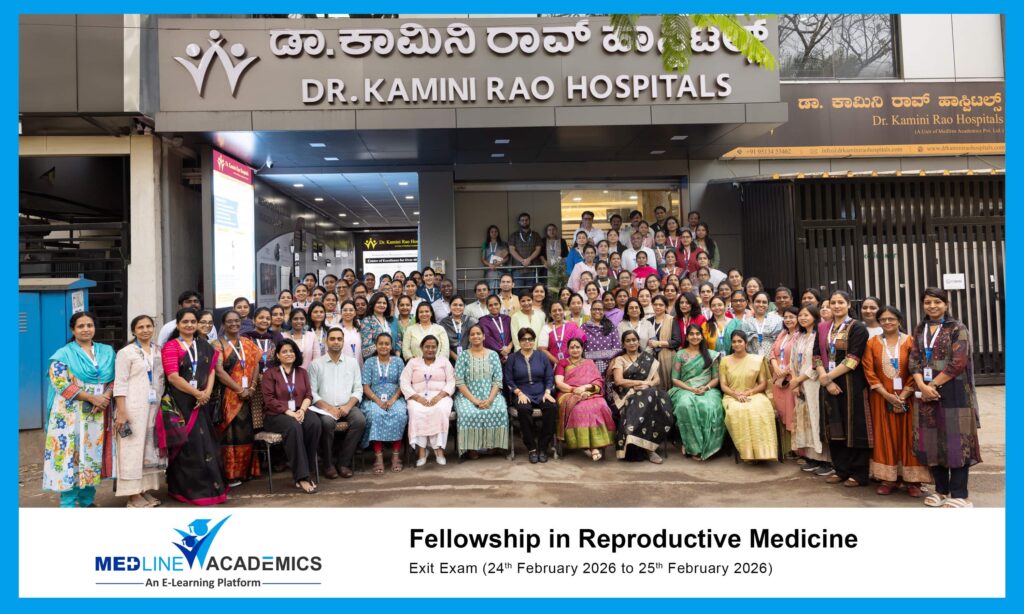
Understanding the fundamentals of fertilization, cleavage, blastocyst formation, implantation and early embryonic development is essential for students and professionals aspiring to build a career in reproductive medicine and embryology. Medline Academics offers comprehensive infertility fellowship in India designed to bridge the gap between theoretical knowledge and clinical practice. Through expert-led teaching, simulation training and hands-on experience, learners gain strong foundation. For those seeking specialized training, Medline Academics also offers some of the most structured embryology training courses in Bangalore, India, enabling the participants to develop practical skills in assisted reproductive technologies and modern embryology techniques under experienced faculty guidance.

With a legacy of excellence in reproductive healthcare, Dr. Kamini Rao Hospitals is dedicated to providing comprehensive fertility, gynaecology, obstetric, and reproductive medicine services under the guidance of renowned experts. Established to carry forward the vision of Padma Shri Prof. Dr. Kamini A Rao, this Infertility Hospitals in Bangalore, combines reproductive technologies, state-of-the-art infrastructure, and personalized patient care to support individuals and couples on their journey to parenthood. From fertility assessment and assisted reproductive techniques to women’s health services spanning menarche to menopause, Dr. Kamini Rao Hospitals continues to set benchmarks in  compassionate, evidence based reproductive healthcare.

That’s all about the important questions basically all these questions that we have discussed these are important as well as basic concepts for maintaining or gaining other knowledge in future.

Passenger holding a railway ticket at an Indian railway station platform, illustrating Indian Railways waiting-list tickets, train travel, and reservation booking rules.

I Discovered an Indian Railway Rule That Could Save Your Important Journey

Many railway passengers still do not know this important fact: a waiting-list ticket booked from a railway reservation counter is treated differently from a waiting-list e-ticket booked online. If an online ticket remains fully waitlisted after chart preparation, it is automatically cancelled and cannot be used for travel. However, a counter-booked waiting-list ticket is not automatically cancelled in the same way, which can give passengers additional options depending on railway rules and available accommodation. This was something I discovered during a recent train journey, and it completely changed my understanding of railway travel.

A Late-Night Conversation That Changed My Understanding

A few days ago, I was traveling by train. It was around 1:00 AM, and most passengers in the coach were asleep. During a brief moment when I woke up, I noticed two couples standing near the coach door. They had been there for quite some time, so I became curious and asked why they were standing instead of resting.

One of them explained their situation.

They had booked their train tickets several days earlier from a railway reservation counter. Their tickets were on the waiting list and unfortunately did not get confirmed even after chart preparation. Normally, many people assume that an unconfirmed ticket means the journey is impossible.

However, these passengers seemed calm. They already knew something that I did not know.

They explained that because their tickets were purchased from a railway reservation counter, the tickets were not automatically cancelled in the same way as a waitlisted online ticket. That conversation introduced me to a railway rule that I had never paid attention to before.

Understanding the Difference Between Counter Tickets and Online Tickets

Before this journey, I believed that all waiting-list tickets followed exactly the same rules. Like many passengers, I thought an unconfirmed ticket always meant the end of the journey.

After speaking with those passengers, I started researching the subject and discovered that Indian Railways handles online and counter-booked waiting-list tickets differently.

This difference is important because many travelers book tickets without understanding what happens when their waitlist status does not move to RAC or Confirmed.

What Happens to a Waitlisted Online Ticket?

When a passenger books a waiting-list ticket through the IRCTC website or mobile app, the ticket is considered an e-ticket. If the ticket remains fully waitlisted even after chart preparation, it is automatically cancelled.

The passenger’s name is removed from the reservation chart, and the ticket cannot be used for travel in a reserved coach. The refund process is also handled automatically according to IRCTC rules.

This means that a fully waitlisted online ticket effectively becomes useless for the planned journey once chart preparation is completed.

What Happens to a Waitlisted Counter Ticket?

A waiting-list ticket purchased from a railway reservation counter is handled differently. Unlike a fully waitlisted e-ticket, it is not automatically cancelled after chart preparation.

This is the information that surprised me the most.

However, it is very important to understand one thing correctly. A counter-booked waiting-list ticket does not guarantee a reserved berth or seat. It also does not automatically allow passengers to occupy reserved accommodation. Travellers must follow the latest Indian Railways rules and instructions issued by ticket-checking staff and railway authorities.

Many people misunderstand this point and assume that a counter ticket automatically guarantees the journey in the reserved coach. That assumption can create problems during travel.

How This Information Could Help Travelers

Looking back, I realised how many opportunities I may have missed because I did not know this difference.

Whenever my waiting-list ticket looked unlikely to be confirmed, I often searched for expensive last-minute alternatives. Sometimes I postponed important work. On a few occasions, I cancelled trips completely because I believed there were no other practical options available.

Understanding the distinction between counter-booked tickets and online tickets gives travellers more information when making decisions.

This can be especially useful during festival seasons, school vacations, public holidays, and other peak travel periods when waiting lists become extremely long.

Suppose you check train availability online and discover that your preferred train already has a significant waiting list. If your journey is important and flexibility matters, knowing the differences between booking methods can help you plan more effectively and avoid unnecessary confusion.

Check the Rules Before You Cancel Your Next Journey

The biggest lesson from my late-night train conversation was simple: never assume that a waiting-list ticket tells the entire story. Before cancelling an important trip, take a few minutes to understand the latest railway regulations, check your PNR status, and learn how different booking methods are treated.

A small piece of knowledge can sometimes save a great deal of stress.

Official Reference: Readers can verify the latest waiting list, cancellation, and reservation rules directly from the official Indian Railways and IRCTC resources:

• IRCTC Cancellation & Refund Rules: https://contents.irctc.co.in/en/CancellationRulesforIRCTCTrain.pdf

• Indian Railways Reservation Rules: https://www.indianrail.gov.in

Being aware of the rules before you travel can help you make better decisions and avoid unnecessary disruption to your plans.

German Language Course Calicut: Your Gateway to Global Education and Career Opportunities

Students and professionals across Kerala are now looking beyond local career options. Many dream about studying, working, or settling in Germany. Learning German has become one of the most important steps toward achieving that dream. A strong language foundation can improve communication skills, increase confidence, and open doors to international opportunities.

Choosing the right institute is important for successful learning. A quality German language course Calicut can help students prepare for higher studies, jobs, migration, and language certification exams in a professional way.

Germany Opens Doors to a Better Future

Germany is one of the strongest economies in Europe. Thousands of international students and skilled workers move there every year. The country offers excellent education, advanced technology, and strong career opportunities.

Many universities in Germany provide low-cost or even tuition-free education. This attracts students from different parts of India, especially Kerala. German companies also need skilled workers in healthcare, engineering, IT, hospitality, and other sectors.

Language is often the first challenge for students and professionals. Without proper German communication skills, it becomes difficult to study, work, or manage daily life in Germany. This is why learning German early becomes very important.

Why German Language Skills Matter Today

German is one of the most spoken languages in Europe. It is useful not only in Germany but also in Austria, Switzerland, and several European regions. Learning German can improve both academic and professional opportunities.

Students who know German can:

  • Apply for higher education in Germany
  • Attend interviews with more confidence
  • Communicate easily during travel
  • Build stronger professional profiles
  • Improve migration opportunities

German language skills also help job seekers stand out from others. Employers often prefer candidates who can communicate in multiple languages.

Learning German Step by Step

German language learning follows different levels. Each level improves speaking, reading, writing, and listening skills gradually. Students can progress from beginner to advanced levels through proper training and practice.

A1 Level – The Beginner Stage

This is the starting point for every learner. Students learn simple words, greetings, and daily communication. They can introduce themselves and understand basic conversations.

A1 level is suitable for:

  • Beginners
  • School students
  • College students
  • First-time language learners

This level builds confidence and removes fear about learning a foreign language.

A2 Level – Basic Communication Skills

A2 helps learners communicate better in common situations. Students become comfortable with shopping, directions, and family conversations.

At this stage, learners improve:

  • Sentence formation
  • Listening ability
  • Daily communication
  • Reading skills

A2 is often useful for students preparing for migration or further studies.

B1 Level – Independent Communication

B1 level helps learners manage conversations independently. Students can express ideas clearly and discuss topics with confidence.

This level is helpful for:

  • Job seekers
  • University applicants
  • Travel purposes
  • Professional communication

Many learners begin feeling comfortable speaking German during this stage.

B2 Level – Professional and Academic Communication

B2 focuses on advanced speaking and understanding. Learners can understand complex discussions and technical topics.

Students at this level can:

  • Attend academic programs
  • Join professional workplaces
  • Communicate naturally with native speakers
  • Participate in discussions confidently

B2 certification is often required for higher studies and many professional roles.

C1 and C2 Levels – Advanced Fluency

These are advanced levels for learners aiming for expert-level communication. Students can understand long texts, complex discussions, and professional communication smoothly.

Advanced German skills are useful for:

  • Research programs
  • Professional careers
  • Academic teaching
  • Advanced migration requirements

Fluency becomes more natural at these levels.

Importance of Professional Training

Learning German alone can become difficult. Professional guidance makes the process easier and faster. Experienced trainers help students understand pronunciation, grammar, and sentence structure clearly.

A trusted International language institute Calicut can provide:

  • Structured learning methods
  • Practice sessions
  • Speaking activities
  • Exam preparation support
  • Online and offline classes

Regular interaction and proper guidance improve fluency over time.

Choosing the Right Learning Environment

The learning environment plays an important role in language development. Comfortable classrooms and interactive sessions improve confidence. Small batches also help students receive personal attention.

Students should look for:

  • Experienced trainers
  • Flexible timings
  • Practical speaking sessions
  • Study materials
  • Certification guidance

Proper support encourages learners to stay motivated throughout the course.

Online and Offline Learning Options

Modern language institutes now provide both classroom and online learning options. Students can choose the method that suits their schedule and comfort.

Benefits of Offline Classes

  • Direct interaction with trainers
  • Better speaking practice
  • Classroom activities
  • Group learning experience

Benefits of Online Classes

  • Flexible learning from home
  • Time-saving Easy access for working professionals
  • Comfortable learning environment

Both methods can help learners improve effectively when regular practice is maintained.

German Language Skills for Career Growth

German language skills can improve job opportunities across many industries. Employers value multilingual candidates because communication is important in international workplaces.

Popular career fields include:

  • Nursing Engineering
  • Information Technology
  • Hospitality
  • Tourism
  • Translation
  • Teaching

German-speaking professionals often receive better opportunities abroad.

Building Confidence Through Communication

Many beginners fear speaking a new language. This fear is normal. Continuous practice slowly improves confidence.

Simple activities can help learners:

  • Watching German videos
  • Listening to German audio
  • Reading simple texts
  • Practicing daily conversations
  • Revising vocabulary regularly

Small daily improvements create strong long-term results.

A Smart Step Toward Your Global Dream

Learning German is more than studying a language. It is a step toward global education, career growth, and personal development. Germany continues to welcome skilled students and professionals from around the world.

Strong communication skills can make life abroad easier and more successful. With proper training, regular practice, and expert guidance, students can confidently prepare for international opportunities and build a brighter future.

A pair of reading glasses resting on an open book in a calm indoor setting, symbolizing the emotional acceptance of presbyopia and the message behind the blog “Reading Glasses Are Not Defeat.

Presbyopia: Reading Glasses Are Not Defeat

This blog is a continuation of my earlier blog, “Presbyopia: The Day I Realized My Eyes Were Quietly Changing.” In that article, I briefly discussed one small but emotional part of my experience – “Reading Glasses Are Not Defeat.” Later, I realized that topic itself carried a much deeper emotional story, especially for people in their thirties and forties who silently struggle with presbyopia but hesitate to accept it.

Because honestly, the problem is not always the eyes.

Sometimes, the real struggle happens inside the mind.

Why Young People Feel Ashamed of Reading Glasses

When people hear about reading glasses, they usually imagine elderly people reading newspapers with spectacles resting at the edge of their noses.

That image itself creates fear for younger people facing presbyopia.

When I started experiencing difficulty reading small letters, I never imagined I would need reading glasses so early. Somewhere inside my mind, wearing glasses felt like announcing to society:
“I am getting old.”

That thought disturbed me more than the blurry vision itself.

I know many youngsters who experience the same thing. They struggle to read messages, zoom phone screens continuously, or hold books farther away but still avoid spectacles because they fear judgment from others.

They think:

  • friends may tease them
  • relatives may say they became old
  • people may think their eyesight became weak
  • spectacles may affect personality or appearance

I had exactly the same feelings.

The Day the Eye Specialist Gave Me Glasses

As my presbyopia symptoms became more disturbing, I finally visited an eye specialist.

She checked my eyesight carefully and prescribed reading glasses. Then she said something very casually:
“Use it regularly for one or two weeks.”

For her, it was probably a simple medical suggestion.

But inside my mind, it felt like a major emotional decision.

I immediately made my own secret plan:
I would use the glasses only during work time.

Only during screen usage.

Never outside.

Never in front of people unnecessarily.

At that stage, my ego was still stronger than my comfort.

The Strange Hide and Seek with Letters

During that period, I struggled badly while reading books and newspapers.

The small blurry letters felt like they were playing hide and seek in front of my eyes.

Sometimes I adjusted the distance.
Sometimes I changed the lighting.
Sometimes I cleaned my eyes with water thinking tiredness was the problem.

Even during those uncomfortable moments, I avoided wearing my glasses for reading.

Why?

Because somewhere inside me, I feared my family members would think:
“My eyesight has become weak.”
“He is becoming old.”

Today, when I think about it, that fear sounds unnecessary. But at that time, it felt emotionally real.

That is the strange thing about presbyopia:
the emotional resistance often becomes stronger than the physical difficulty itself.

How Ego Creates More Eye Strain

After reading more about presbyopia and understanding the condition better, I slowly realized something important.

In the name of ego and unnecessary social fear, I was giving extra stress to my eyes every day.

Instead of helping my eyes, I was forcing them to struggle continuously.

The more I resisted glasses,

  • the more eye strain increased
  • the more headaches appeared
  • the more uncomfortable reading became

That realization changed my mindset completely.

I understood something simple:
Wearing glasses was not making my eyes weak.

Ignoring the problem was creating more discomfort.

The day I emotionally accepted that truth, I started wearing my glasses more naturally.

And honestly, life immediately became easier.

Reading Glasses Are Not Weakness

One dangerous misunderstanding still exists among many people.

They believe:
“If I start using reading glasses once, then I can never live without them.”

This fear prevents many people from getting proper help.

But reading glasses are not an addiction.

They are supportive.

They simply help the eyes focus more comfortably after the natural lens inside the eye loses flexibility with age.

In fact, struggling continuously without proper correction often creates more stress and frustration.

We never feel ashamed about using:

  • proper lighting
  • supportive chairs
  • comfortable shoes

Then why should we feel ashamed about helping our eyes see comfortably?

My Mother’s Experience Changed My Thinking

One of the biggest lessons came from my mother’s life.

I know her as a passionate reader. She loves:

  • books
  • newspapers
  • magazines

Reading was part of her daily happiness.

But during her forties, she also started suffering from presbyopia.

At that time, someone advised her something completely wrong:

don’t wear glasses
don’t force reading
presbyopia will automatically cure later
if glasses are used once, they become permanent forever

Believing that advice, she reduced reading slowly.

That period disappointed her deeply.

A person who genuinely loved reading suddenly stopped enjoying one of her favorite activities because of fear and misinformation.

Later, when I understood her struggle, I took her to an eye specialist.

She started wearing proper reading glasses.

Honestly, it became a small revolution in her life.

She returned to:

  • reading books
  • newspapers
  • magazines

More importantly, she returned to her favorite work – tailoring.

Today, she spends more time sewing comfortably and even earns money through her work.

That simple pair of spectacles gave back a part of her old lifestyle.

The Sewing Machine Moment That Hurt Me Emotionally

An interesting emotional moment connected both our lives together.

In my earlier blog, Presbyopia: The Day I Realized My Eyes Were Quietly Changing, I wrote about “The Sewing Machine Moment That Hurt Me Emotionally named part.”

That moment became unforgettable for me.

Earlier, I could easily help my mother thread the sewing machine needle. But during my own presbyopia stage, I suddenly struggled to see the tiny needle hole clearly.

Meanwhile, my mother calmly wore her glasses and completed the task within seconds.

The irony was painful.

I was the person who once encouraged my mother to accept spectacles without shame.

But when the same situation entered my own life, I became trapped inside the same ego, doubt, and fear.

That experience taught me how difficult self-acceptance can be sometimes.

Modern Lifestyle Makes Presbyopia More Visible

I also believe our generation experiences presbyopia differently because of digital life.

Today, we constantly use:

  • smartphones
  • laptops
  • tablets
  • televisions

Our eyes rarely rest.

Tiny app fonts, low brightness screens, and continuous close focusing make near-vision problems feel stronger than before.

Sometimes I used to take screenshots only to zoom and read clearly.

At first, I thought this was normal for everyone.

Later, I realized many people around me were reading comfortably while I was struggling silently.

Modern screens may not directly “destroy” eyesight, but they definitely make presbyopia more noticeable in daily life.

Natural Alternatives Instead of Reading Glasses

Many people ask:
“Is there any natural option instead of glasses?”

From my understanding and experience, some habits can definitely reduce strain and improve comfort:

  • better sleep
  • proper lighting
  • reducing excessive screen time
  • taking eye breaks
  • blinking more during screen use
  • healthy diet
  • outdoor activity

Some people also practice eye relaxation exercises and reduce continuous near-focus pressure.

These habits help eye comfort significantly.

But personally, I understood one important thing:
There is a difference between supporting eye health and denying reality.

Healthy habits are excellent.

But if the eyes genuinely need support for comfortable reading, there is no shame in using glasses.

One Big Lesson I Learned About Life

One important lesson changed my thinking completely.

We must understand ourselves honestly.

When our body becomes weaker in some area, we should not punish it with ego.

We should care for it more carefully.

For example:

when health becomes poor, we improve diet
when body becomes weak, we start exercise
when stress increases, we seek rest

Then why should eyes be treated differently?

Eyes also deserve:

  • care
  • support
  • rest
  • proper attention

Once I started caring for my eyes instead of emotionally fighting reality, life became more peaceful.

Acceptance Is More Powerful Than Ego

Today, I no longer feel ashamed wearing reading glasses.

In fact, I feel more frustrated remembering how much unnecessary struggle I created because of simple social fear.

Presbyopia did not make me weak.

It simply reminded me that the body changes with time.

And honestly, there is maturity in accepting that naturally.

Many people silently suffer because they fear judgment from society. But the truth is:
Most people are too busy dealing with their own insecurities to seriously judge someone wearing spectacles.

The real freedom comes when comfort becomes more important than ego.

Reading Glasses Gave Back More Than Vision

At first, I thought spectacles would symbolize aging.

But later, I realized they actually gave back:

  • comfort
  • confidence
  • reading happiness
  • eye relaxation
  • mental peace

Most importantly, they removed the daily frustration of struggling with tiny letters constantly.

Today, I understand something very clearly:

Reading glasses are not defeat.

Defeat is ignoring reality, stressing the eyes unnecessarily, and losing comfort because of fear and ego.

Sometimes maturity begins the moment we stop fighting natural changes and start supporting ourselves with kindness instead.

Presbyopia and Near Vision Difficulty While Threading a Sewing Machine

Presbyopia: The Day I Realized My Eyes Were Quietly Changing

There was a time when I could read anything without effort. Tiny letters on medicine covers, small fonts in newspapers, messages on my phone in low light – everything felt easy. I never thought about my eyes because they simply worked. But somewhere after my mid-thirties, I started noticing something strange.

I was holding my phone a little farther away.

At first, I ignored it. I thought maybe my eyes were tired after work or because I spent too much time on the computer. But slowly, that small habit became part of my daily life. Reading WhatsApp messages became easier only when I increased the font size. Book letters started looking crowded. Restaurant menus felt uncomfortable in dim light. I realized something had changed.

That was my first real experience with presbyopia.

The Funny Beginning Nobody Talks About

Most people think eye problems come suddenly, but presbyopia enters life very quietly. You don’t wake up one morning blind to small letters. It happens slowly. One day you stretch your arm a little more while reading. Another day you switch on brighter lights to read comfortably. Later, you start zooming in every document on your phone or laptop.

At first, I blamed mobile phones.

Like many people, I believed excessive screen use had weakened my eyesight completely. I thought years of staring at computers and phones had damaged my eyes forever. But after reading more and talking to others around my age, I understood something important – this happens naturally to almost everyone.

Some notice it at 38. Some at 42. Some even earlier.

The eye’s natural lens slowly loses flexibility with age. That flexibility is what helps us focus on nearby objects. When we are young, the eye adjusts quickly. As age increases, that focusing ability becomes weaker.

That is presbyopia.

When Screenshot Zoom Became My Reading Glass

One habit slowly became part of my daily life without me even noticing it.

Whenever I receive a document, poster, or small text image on my phone, I first take a screenshot of it. Then I zoom into the screenshot to read comfortably. Earlier, I could simply open and read things directly. Now, small text inside posters, advertisements, or PDF files often feels difficult unless I enlarge it.

At first, I thought maybe mobile designers were making fonts too tiny. But later I realized other people around me were reading the same thing comfortably while I was struggling.

That small habit – screenshotting just to zoom and read – became one of the clearest signs that my near vision had changed.


The Sewing Machine Moment That Hurt Me Emotionally

One moment affected me more than anything else.

My mother has a sewing machine at home. Earlier, whenever she needed help, I could easily put the thread into the needle. It was such a simple thing that I never even thought about it.

But nowadays, I struggle to do it.

I try once… twice… three times… and the tiny needle hole refuses to become clear. Sometimes I move the thread farther away, sometimes closer. I even blamed the room lighting and thought our bulb was too dim.

Meanwhile, my mother calmly wears her regular glasses and does it easily within seconds.

That moment honestly disappointed me emotionally.

Not because of the sewing machine itself, but because it made me realize that the problem was no longer the light, the thread, or the needle. The real issue was my eyes changing with age.

It was probably the first time I truly accepted that presbyopia had entered my life.

Modern Life Makes Us Notice It Earlier

Even though presbyopia is natural, I still believe modern digital life makes the symptoms feel stronger.

Years ago, people didn’t spend ten or twelve hours looking at close objects. Today, our eyes continuously focus on:

  • mobile screens
  • laptops
  • tablets
  • smart watches
  • televisions
  • small text notifications

Our eyes rarely get rest.

After a full day of screen work, I could feel heaviness around my eyes. Sometimes the letters became slightly blurry for a few seconds before becoming clear again. During night time, reading became even harder.

I don’t think phones directly “destroy” eyesight the way people fear, but they definitely increase eye strain and make us realize our focusing problems much earlier.

In earlier generations, maybe people noticed presbyopia only while reading newspapers. Today, we notice it every ten minutes because our entire life happens through screens.

The Emotional Side Nobody Mentions

What surprised me most was not the reading difficulty itself. It was the emotional feeling behind it.

Presbyopia quietly reminds you that your body is changing.

When you are young, your body feels automatic. You don’t think about joints, digestion, sleep quality, or eye focus. But after thirty-five, small changes begin appearing one by one. Presbyopia becomes one of those early reminders that time is moving.

The first time I increased the font size on my phone permanently, I felt strange. It sounds funny, but it honestly felt like crossing into another phase of life.

Then I noticed my friends doing the same thing.

One friend started using reading glasses in restaurants. Another began zooming every PDF file during office work. Someone else complained that medicine labels had become impossible to read.

That’s when I understood – this is not a personal weakness. It is a shared human experience.

Why Small Letters Became My Enemy

The most frustrating part of presbyopia is not blindness. It is inconsistency.

Some days my eyes feel perfectly normal. Other days, especially after long screen use, small letters become tiring within minutes.

Low light became my biggest enemy.

Earlier, I could read comfortably in dim rooms. Now I automatically search for brighter lighting. I also noticed that sleep affects eye comfort. If I sleep poorly, reading becomes harder the next day.

Another interesting thing is distance.

If the phone is too close, letters blur slightly. When I move it farther away, clarity improves. That small movement became automatic without me realizing it.

This is probably the most common sign of presbyopia:
holding things farther away to read clearly.

Reading Glasses Are Not Defeat

At first, I resisted the idea of reading glasses.

I thought:
“If I start using glasses now, my eyes will become weaker.”

Many people believe this, but I slowly learned that reading glasses are not making the eyes lazy. They are simply reducing strain.

Using proper glasses is similar to using proper lighting while reading. They help the eyes work comfortably instead of struggling continuously.

Once I accepted that idea, my mindset changed. In fact, that realization later inspired me to write my detailed blog, Presbyopia: Reading Glasses Are Not Defeat, because I understood the real struggle was not only about vision – it was also about ego, fear, and accepting natural changes in life.

There is nothing embarrassing about needing help for near vision after forty. In fact, millions of people experience exactly the same thing. Some just hide it better than others.

Now I understand why many older people carry glasses everywhere:

  • in pockets
  • on office tables
  • inside cars
  • near beds

It is not fashion. It is survival.

How Presbyopia Changed My Screen Habits

One good thing happened because of this experience: I became more conscious about eye care.

Earlier, I could spend hours continuously looking at screens without a break. Now my eyes force me to pause. Surprisingly, that improved my overall comfort.

I started following simple habits:

  • increasing font sizes
  • reducing brightness at night
  • taking short breaks
  • blinking more often
  • avoiding unnecessary screen scrolling
  • keeping proper distance from monitors

I also discovered that dry eyes play a major role. Continuous screen use reduces blinking, which creates irritation and fatigue. Sometimes the problem is not vision power itself but dryness and eye strain together.

Now I understand why older people often prefer printed books over phone reading. Paper feels softer and less aggressive to the eyes compared to bright digital screens.

The Biggest Mistake People Make

Many people panic when they notice presbyopia symptoms.

They immediately think:

“My eyesight is getting destroyed.”
“Mobile phones ruined my eyes.”
“Soon I won’t see properly.”

But presbyopia is not blindness.

It is a normal age-related focusing change.

Of course, proper eye checkups are important because sometimes other conditions like astigmatism or dryness can exist together. But simple near-vision difficulty after the late thirties is extremely common.

The real problem is not presbyopia itself.

The real problem is how modern life demands constant near focus every single day.

Humans were not designed to stare at glowing rectangles for fourteen hours daily.

What I Learned About Aging

Presbyopia taught me something bigger than eye health.

Aging does not happen suddenly. It arrives through small adjustments.

One day you need brighter light.
One day you stretch your arm farther.
One day you increase font size.
One day you buy reading glasses.

Life continues normally, but tiny changes slowly rewrite daily routines.

Instead of fearing these changes, I think acceptance makes life easier.

Our parents experienced this.
Their parents experienced it.
We are simply reaching the same stage.

The difference is that our generation experiences it through smartphones and computer screens instead of newspapers and books.

Can Presbyopia Be Cured After Some Age?

This is a question many people silently ask themselves.

I also wondered:
“Will my eyes become normal again later?”

From what I understand, presbyopia usually does not completely reverse naturally because it happens due to age-related stiffening of the eye’s natural lens. As age increases, the lens loses flexibility little by little.

That means the focusing difficulty may slowly continue over time.

But the positive side is this:
People adapt very well to it.

Some use reading glasses.
Some increase screen sizes.
Some use proper lighting.
Some choose progressive lenses.

After a while, these adjustments become part of normal life, and people stop thinking about it constantly.

So maybe the real “cure” is not becoming twenty years old again- it is learning how to live comfortably with changing eyes without fear or frustration.

The Day I Stopped Blaming the Screen and Started Understanding My Eyes

Today, I no longer feel worried when I zoom text or increase font size. I don’t consider it a weakness anymore. It is simply adaptation.

Presbyopia is not the end of sharp vision. It is just the beginning of understanding our eyes differently.

In fact, this condition taught me to respect my body more.

  • rest matters
  • lighting matters
  • screen habits matter
  • sleep matters
  • eye care matters

Most importantly, I learned that growing older is not about losing ability. It is about learning new ways to stay comfortable.

So if you are in your late thirties or forties and suddenly struggling with small letters, welcome to the club. You are not alone.

Your eyes are not failing.

They are simply changing with time – just like the rest of life.

Driving Test Tips to Pass on the First Attempt in Canada

Passing a driving test in Canada on the first attempt is an important step toward independence, but it can feel overwhelming without proper preparation. Canadian driving tests are designed to assess not just driving skills, but also safety awareness, confidence, and responsible decision-making. With the right approach, passing on your first try is completely achievable.

Understanding the Canadian Driving Test

Most Canadian provinces follow a graduated licensing system, such as G1 to G2 to G in Ontario or Class 7 to Class 5 in provinces like British Columbia and Alberta. The road test evaluates how well a driver follows traffic laws, observes surroundings, controls the vehicle, and responds to real road conditions. Knowing what the examiner looks for helps reduce anxiety and improves performance.

The Importance of Professional Driving Lessons

Taking lessons from a certified driving school can significantly improve your chances of success. Professional instructors understand test routes, common mistakes, and province-specific rules. They help learners build good habits early, correct errors, and gain confidence behind the wheel. Many students who take professional lessons feel more prepared and relaxed during the test.

Practicing Defensive Driving

Defensive driving is a key focus of Canadian driving exams. Examiners want to see that drivers can anticipate hazards and react calmly. This includes being aware of surrounding traffic, pedestrians, cyclists, and unexpected situations. Demonstrating caution and awareness shows that you can drive safely in real-world conditions.

Mastering Essential Driving Skills

Before taking the test, learners should be fully comfortable with common driving maneuvers such as parking, turning, lane changing, and stopping smoothly. These skills should feel natural rather than forced. Practicing regularly in different traffic conditions helps build muscle memory and confidence.

Obeying Speed Limits and Road Signs

Strict adherence to speed limits and traffic signs is essential during the driving test. Driving too fast, failing to stop completely, or missing important signs can lead to immediate failure. Maintaining a steady speed and paying close attention to road markings demonstrate control and responsibility.

Showing Proper Observation

Examiners expect drivers to clearly show that they are observing their surroundings. Turning your head during mirror checks, scanning intersections, and checking blind spots helps demonstrate awareness. Visible observation reassures the examiner that you are attentive and safety-focused.

Staying Calm and Focused During the Test

Feeling nervous is normal, but staying calm is crucial. Taking deep breaths, listening carefully to instructions, and focusing on one action at a time can help reduce stress. Even if a small mistake occurs, continuing calmly often prevents further errors.

Knowing Province-Specific Driving Rules

Each Canadian province has slight differences in driving laws and testing standards. Understanding local rules such as school zone speeds, right turns on red, and yielding requirements is important. Reviewing the official driver handbook before the test ensures you are well prepared.

Preparing Your Vehicle for the Test

A vehicle in good condition is essential for a successful driving test. Examiners may cancel the test if the car is unsafe or not properly maintained. Ensuring that lights, brakes, signals, and tires are in good working order helps avoid unnecessary issues on test day.

Final Thoughts

Passing your driving test on the first attempt in Canada requires preparation, practice, and confidence. By understanding the test format, driving defensively, and staying focused, you can approach your test day with confidence. Remember, the examiner’s goal is to ensure you are a safe and responsible driver, not a perfect one.