Construction

Matte vs Gloss: Choosing the Right Finish for Bathroom and Kitchen Fixtures

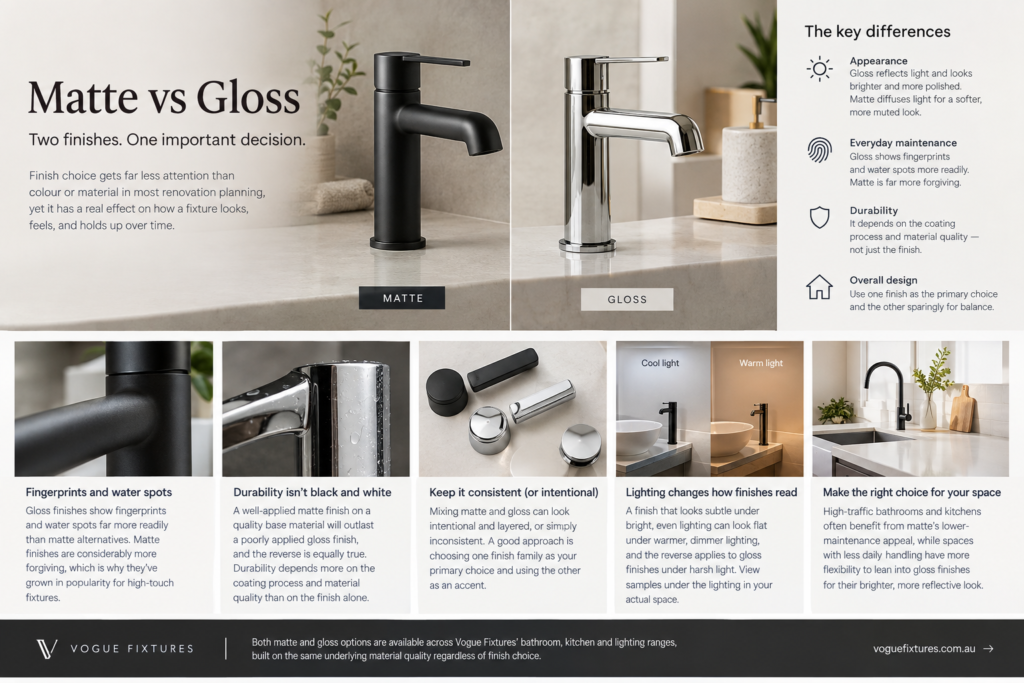
Finish choice gets far less attention than colour or material in most renovation planning, yet it has a real effect on how a fixture looks, feels, and holds up over time. Matte and gloss finishes each come with genuine trade-offs worth understanding before committing to one across an entire renovation.

What Actually Differs Between Matte and Gloss

Gloss finishes reflect light and tend to make a space feel brighter and more polished, while matte finishes diffuse light and create a softer, more muted appearance. Beyond the visual difference, the two finishes also behave differently in daily use, which matters just as much as appearance for fixtures that get touched constantly.

Fingerprints and Water Spots

Gloss finishes, particularly on tapware and hardware, show fingerprints and water spots far more readily than matte alternatives. In a busy household, this can mean noticeably more frequent cleaning just to keep fixtures looking presentable. Matte finishes are considerably more forgiving here, which is part of why they’ve grown in popularity for high-touch fixtures.

Durability Differences Are Real, But Not Always in the Direction People Expect

It’s a common assumption that matte finishes are inherently more durable, but this isn’t universally true. Durability depends more on the underlying coating process and material quality than on matte versus gloss alone. A well-applied matte finish on a quality base material will outlast a poorly applied gloss finish, and the reverse is equally true.

Matching Finish Across a Renovation

Mixing matte and gloss extensively within the same space can look intentional and layered, or simply inconsistent, depending on execution. A reasonable approach is choosing one finish family as the primary choice, matte tapware with matte hardware, for example, and using the other finish sparingly as an accent rather than mixing unpredictably throughout a room.

Lighting Changes How Finishes Read

A finish that looks appropriately subtle under bright, even lighting can look flat and underwhelming under warmer, dimmer lighting, and the reverse applies to gloss finishes under harsh light. It’s worth viewing fixture samples under lighting similar to what the actual space will have, rather than relying purely on showroom lighting or product photography.

Making the Final Decision

There’s no universally correct choice between matte and gloss, the right decision depends on how a space is used, how much maintenance a household is willing to do, and the overall design direction of the renovation. High-traffic bathrooms and kitchens often benefit from matte’s lower-maintenance appeal, while spaces with less daily handling have more flexibility to lean into gloss finishes for their brighter, more reflective look.

For homeowners deciding between finishes, Vogue Fixtures offers both matte and gloss options across its bathroom, kitchen and lighting ranges, built on the same underlying material quality regardless of finish choice.
 

Terracotta jalis

Terracotta Jali for Homes: Designs, Uses, Sizes, and Selection Guide

Terracotta jali has become a popular architectural element in modern Indian homes. Combining traditional craftsmanship with contemporary design, these perforated clay blocks are widely used to create decorative walls, facades, partitions, and ventilation screens. Whether you are building a new home or renovating an existing property, terracotta jali can add both visual appeal and functional value to a space.

What Is Terracotta Jali?

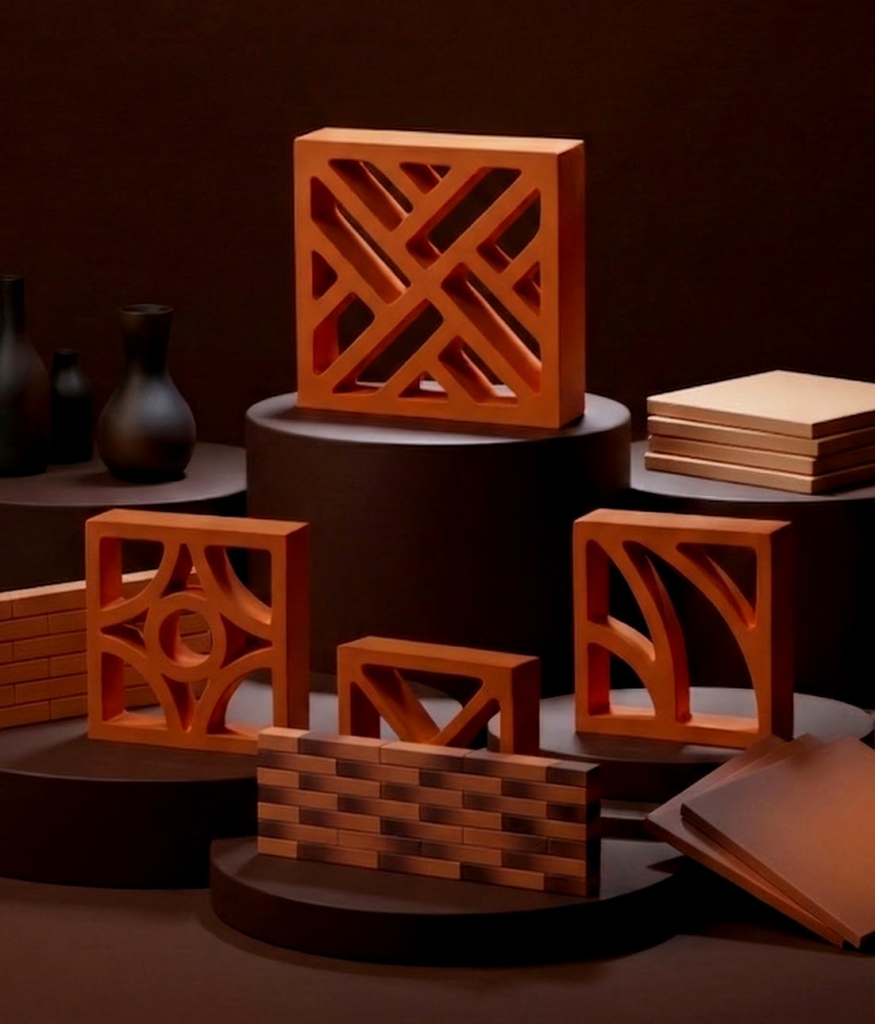
Terracotta jali, also known as terracotta jaali or terracotta jali brick, is a perforated clay block made from natural clay and fired at high temperatures. The patterned openings allow air and light to pass through while maintaining a degree of privacy.

Originally seen in traditional Indian architecture, terracotta jali designs are now commonly used in modern residential and commercial projects due to their distinctive appearance and versatility.

Popular Terracotta Jali Designs

One of the biggest advantages of terracotta jali is the wide range of available patterns. Homeowners can choose from geometric, floral, contemporary, and traditional motifs depending on the architectural style of the building.

Some terracotta jali designs feature symmetrical geometric patterns suitable for modern homes, while others use decorative motifs inspired by traditional Indian architecture. The choice of design influences not only the appearance of the wall but also the amount of light, airflow, and privacy it provides.

Common Terracotta Jali Sizes

Terracotta jali sizes vary by manufacturer and design. Many suppliers offer standard modular sizes that simplify installation and create a consistent appearance across larger wall sections.

Since dimensions can differ between manufacturers, it is always advisable to review product specifications before finalising a design. Architects often select jali sizes based on the intended application, wall dimensions, and visual effect required.

Where Can Terracotta Jali Be Used?

Terracotta jali for home projects offers a wide range of applications. Some of the most common uses include:

  • Exterior facades
  • Boundary walls
  • Balcony screens
  • Courtyard enclosures
  • Staircase ventilation walls
  • Garden partitions
  • Interior room dividers
  • Decorative feature walls

Because of its versatility, terracotta jaali for walls can work equally well in traditional homes and contemporary architectural designs.

Benefits of Terracotta Jali

Many homeowners choose terracotta jali because it combines aesthetics with functionality.

Natural Ventilation

The perforated design allows airflow through the structure, making it a practical option for open spaces, courtyards, and semi-outdoor areas.

Privacy Without Complete Enclosure

Terracotta jali design patterns can partially block direct views while still maintaining openness and visual connection between spaces.

Architectural Character

Terracotta introduces a natural texture and earthy appearance that complements many Indian architectural styles, from traditional homes to modern villas.

How to Choose the Right Terracotta Jali

When selecting a terracotta jali for home use, consider the following factors:

  • Purpose of the installation, such as ventilation, privacy, or decoration
  • Design compatibility with the home’s architecture
  • Pattern density and opening size
  • Available dimensions
  • Indoor or outdoor application
  • Installation requirements
  • Maintenance expectations

For example, larger openings may provide more airflow, while denser patterns may offer greater privacy. Matching the pattern to the overall architectural style helps create a more cohesive design.

Installation and Maintenance Considerations

Proper installation is essential for both appearance and performance. Terracotta jali should be installed according to the manufacturer’s recommendations and project requirements.

Routine maintenance is generally straightforward. Periodic cleaning and inspection can help maintain the appearance of the jali and identify any damage that may require repair or replacement. The specific maintenance needs will depend on the location and environmental conditions.

Conclusion

Terracotta jali remains a timeless architectural feature that combines design, ventilation, and privacy in a single solution. With a wide range of terracotta jali designs, patterns, and applications available, homeowners can use these decorative clay blocks to enhance both indoor and outdoor spaces.

Before making a purchase, compare available terracotta jali sizes, evaluate design options, and consider how the jali will function within your home’s overall architectural style. Choosing the right terracotta jali can create a distinctive and visually appealing feature that complements your property for years to come.